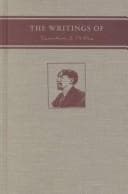
The instinct of workmanship, and the state of industrial artsVeblen, Thorstein
Philosophy
The instinct of workmanship, and the state of industrial arts
Veblen, Thorstein
Industrial arts -- History; Industries -- History; Technology -- History; Workmanship -- History
These and the like consequences of pecuniary emulation are simple,
direct and obvious; but the discipline of the pecuniary culture bears
on workmanship also in a more subtle way, indirect and less evident
at first sight. The discipline of daily life imparts its own bent to
the sense of workmanship through habituation of the workman to that
scheme and logic of things that rules this pecuniary culture. The
outcome as concerns industry is somewhat equivocal; the discipline of
self-seeking at some points favours workmanship and at others not. At
one period or phase of the pecuniary culture, generally speaking an
early or crude phase, the bent so given to workmanship and technology
seems necessarily to be conducive to inefficiency; at another (later or
maturer) phase the contrary is likely to be true.
The pecuniary discipline of invidious emulation takes effect on the
state of the industrial arts chiefly and most pervasively through the
bias which it gives to the knowledge on which workmanship proceeds.
It may be called to mind that the body of knowledge (facts) turned to
account in workmanship, the facts made use of in devising technological
processes and appliances, are of the nature of habits of thought.
This is particularly applicable to those (tactical) principles under
whose control the information in hand is construed and connected up
into a system of uses, agencies and instrumentalities. These habits of
thought, elements of knowledge, items of information, accepted facts,
principles of reality, in part represent the mechanical behaviour of
objects, the brute nature of brute matter, and in part they stand for
qualities, aptitudes and proclivities imputed to external objects and
their behaviour and so infused into the facts and the generalisations
based on them. The sense of workmanship has much to do with this
imputation of traits to the phenomena of observation, perhaps more than
any other of the proclivities native to man. The traits so imputed to
the facts are in the main such as will be consonant with the sense
of workmanship and will lend themselves to a concatenation in its
terms. But this infusion of traits into the facts of observation,
whether it takes effect at the instance of the sense of workmanship,
or conceivably on impulse not to be identified with this instinct, is
a logical process and is carried out by an intelligence whose logical
processes have in all cases been profoundly biassed by habituation.
So that the habits of life of the individual, and therefore of
the community made up of such individuals, will pervasively and
unremittingly bend this work of imputation with the set of their own
current, and will accordingly involve incoming elements of knowledge
in a putative system of relations consistent with these habits
of life. This comprehensive scheme of habitual apprehensions and
appreciations is what is called the “genius,” spirit, or character
of any given culture. In all this range of habitual preconceptions
Public-domain text, read in full here on John Shaqi.
Reviews
Reviews
No reviews yet
Be the first to share your thoughts on this work.
Elsewhere in the archive
Join the Discussion
Join the discussion
Sign in to leave a comment or review.
Sign InorCreate an account