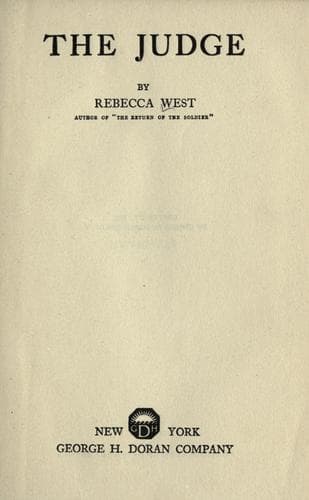
Scotland -- Social life and customs -- 19th century -- Fiction
He did not speak. He did not answer her reluctant invitation that he
should enter. She would have thought him drunk had not the smell that
clung about him been so definitely that of soap. From the garden behind
him, which was quilted by a thick night fog, noises as of roosting birds
disturbed. His head turned on the thick hill of his neck, his lids,
with their fringe of long but sparse black lashes, blinked once or
twice. When the sound had passed, his face again grew blank and moonish
and he stepped within. He laid his bowler hat on the table and began to
strip off his gloves. His fleshy fingers, pink with constriction,
terrified her, and she clapped her hands at him and cried out: "Why have
you come?"
But he answered nothing. Speech is human, and words might have fomented
some human relationship between them, and he desired that they should
know each other only as animals and enemies. He continued to take off
his gloves, while round him fragments of fog that had come in with him
hung in the warm air like his familiar spirits, and then bent over the
lamp. She watched his face grow yellow in the diminishing glare, and
moaned, knowing herself weak with motherhood. Then in the blackness his
weight threshed down on her. Even his form was a deceit, for his vast
bulk was not obesity but iron-hard strength. All consciousness soon left
her, except only pain, and she wandered in the dark caverns of her mind.
Her capacity for sexual love lay dead in her. She saw it as a lovely
naked boy lying with blue lips and purple blood pouring from his side,
where it had been jagged by the boar who still snuffled the fair body,
sitting by with its haunches in a spring. She cried out to herself: "You
can rise above this! This is only a physical thing," but her own answer
came: "Yes, but the other also was only a physical thing. Yet it was a
sacrament and gave you life. There is white magic and black magic. This
is a black sacrament, and it will give you death." Her soul fainted into
utter nothingness.
Public-domain text, read in full here on John Shaqi.
Reviews
Reviews
No reviews yet
Be the first to share your thoughts on this work.
Elsewhere in the archive
Join the Discussion
Join the discussion
Sign in to leave a comment or review.
Sign InorCreate an account