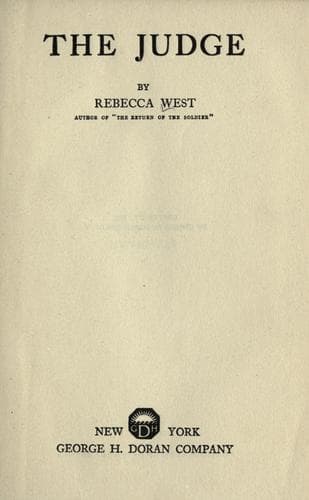
Scotland -- Social life and customs -- 19th century -- Fiction
She did not ask him why he had come at this hour. There was indeed
nothing so very unusual in it, for more than once when he was a sailor
she had been wakened by the patter of pebbles on her window and had
looked down through the darkness on the whitish oval of his face, marked
like a mask with his eagerness to see her; and later, in southern
countries, he had often walked quietly into the dark, cool room where
she lay having her siesta, though she had thought him a hundred miles
away, and it had seemed as if nothing could move in the weighty heat
outside save the writhing sea. It had always seemed appropriate to their
relationship that he should come to her thus, suddenly and without
warning and against the common custom. Thus had he come to be born.
She pushed him away from her. "Have you put your motor-cycle in the
shed?" she asked indifferently.
"No. It's outside the gate."
"Put it in. There may be frost by the morning."
He turned away to do it. To him it was always heaven, like the peace of
dreamless sleep, to hand over to her the heavy sword of his will.
She watched him go out into the white ecstatic glare and pass behind the
illuminated twiggy bareness of the hedge, which looked like the
phosphorescent spine of some monstrous stranded fish. This was a strange
night, crude as if some coarse but powerful human intelligence were
co-operating with nature. She had a fancy that if she strained her ears
she might hear the whirr of the great dynamo that served this huge
electric moon. But however the night might be, this strange, dangerous
son of hers was a match for it. She looked gloatingly after him as he
passed out of her sight, and then turned and went into the kitchen. It
was easy to prepare him a meal, for there was a gas-stove and the stores
lay at her hand, each in its own place, since in her five minutes' visit
to the cook every morning she imposed the same nervous neatness here and
kept the rest of the house rectangular and black and white.
She heard the closing of the front door and his steps coming in search
of her. She liked to think of him finding his way to her by the rays of
light warmer than moonlight through half-open doors. If it had been
anyone else in the world that was coming towards her she would have
gathered up her thick plaits and pinned them about her head. But from
him she need not hide the signs, which made all other people hate her,
that she had been beautiful and had been destroyed.
When he came in she said, "Light the other gas-jets. Yes, both of them."
Public-domain text, read in full here on John Shaqi.
Reviews
Reviews
No reviews yet
Be the first to share your thoughts on this work.
Elsewhere in the archive
Join the Discussion
Join the discussion
Sign in to leave a comment or review.
Sign InorCreate an account