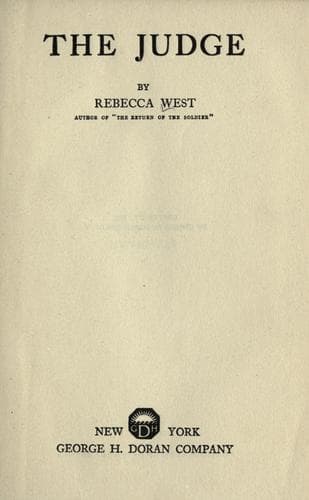
Scotland -- Social life and customs -- 19th century -- Fiction
"Och, no! I'd rather you had the pleasure of them by day, and let the
poor things last. I must content myself with a look at them at
breakfast."
"Nonsense! They're your flowers, lassie. But do you not think it would
do if we brought in the two candles and turned out the gas? It'll be a
bit dark, but it isn't as if there were many bones in the fish-pie."
And that is what they did. It was a satisfactory arrangement, for then
there was a bright soft light on the red and white petals, and a drapery
of darkness about the mean walls of the room, and a thickening of the
atmosphere which hid the archness on the older woman's face, so that the
girl dreamed untormented and without knowing that she dreamed.
"Ah, well!" sighed Mrs. Melville after a silence, with that air of irony
which she was careful to impart to her sad remarks, as if she wanted to
remove any impression that she respected the fate that had assailed her.
"I don't know how many years it is since I sat down with roses on the
table."
"I never have before," said Ellen.
II
It was indeed much more as the friend that Ellen wanted than as the
declared lover he had intended to be that Yaverland came to Hume Park
Square on Saturday in answer to the letter of thanks which, after the
careful composition of eight drafts, she had sent him. All week he had
meant to ask her to marry him at the first possible moment. By day, when
the thought of her rushed in upon him like a sweet-smelling wind every
time he lifted his mind from his work, and by night, when she stood
red-gold and white on every wall of his room in the darkness, it grew
more and more incredible that he could meet her and not tell her that he
wanted to spend all the rest of his life with her. He felt ashamed that
he was not her husband, and at the back of his mind was a confused
consciousness of inverted impropriety, as if continuance in his present
course would bring upon him denunciations from the pulpit for living in
open chastity apart from a woman to whom he was really married. There
was, too, a strange sense of a severer guilt, as if by not letting his
love for her have its way he was committing the crime a scientific man
commits when he fails to communicate the result of a valuable research.
Even when he went out to mount his motor-cycle for the ride to Edinburgh
he meant to force on her at once as much knowledge of his love as her
youth could hold.
Public-domain text, read in full here on John Shaqi.
Reviews
Reviews
No reviews yet
Be the first to share your thoughts on this work.
Elsewhere in the archive
Join the Discussion
Join the discussion
Sign in to leave a comment or review.
Sign InorCreate an account