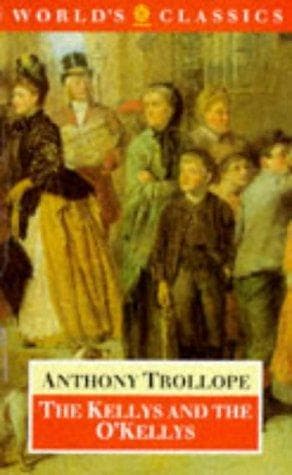
Domestic fiction; Ireland -- Fiction; Land tenure -- Fiction; Landlord and tenant -- Fiction; Landowners -- Fiction
“Exactly so: personal debts of your own. Why, when you’ve made some
final arrangement about the property, you must make some other
arrangement with your creditors. But that’s quite a separate affair;
you don’t expect Martin Kelly to pay your debts, I suppose?”
“But I might get a sum of money for the good-will, mightn’t I?”
“I don’t think Martin’s able to put a large sum down. I’ll tell you
what I think you might ask; and what I think he would give, to get your
good-will and consent to the match, and to prevent any further
difficulty. I think he’d become your tenant, for the whole of your
share, at a rent of five-hundred a year; and maybe he’d give you three
hundred pounds for the furniture and stock, and things about the place.
If so, you should give him a laise of three lives.”
There was a good deal in this proposition that was pleasing to Barry’s
mind: five hundred a-year without any trouble in collecting it; the
power of living abroad in the unrestrained indulgence of hotels and
billiard rooms; the probable chance of being able to retain his income
and bilk his creditors; the prospect of shaking off from himself the
consequences of a connection with the Kellys, and being for ever rid of
Dunmore encumbrances. These things all opened before his eyes a vista
of future, idle, uncontrolled enjoyment, just suited to his taste, and
strongly tempted him at once to close with Daly’s offer. But still, he
could hardly bring himself to consent to be vanquished by his own
sister; it was wormwood to him to think that after all she should be
left to the undisturbed enjoyment of her father’s legacy. He had been
brow-beaten by the widow, insulted by young Kelly, cowed and silenced
by the attorney whom he had intended to patronise and convert into a
creature of his own: he could however have borne and put up with all
this, if he could only have got his will of his sister; but to give up
to her, who had been his slave all his life—to own, at last, that he
had no power over her, whom he had always looked upon as so abject, so
mean a thing; to give in, of his own accord, to the robbery which had
been committed on him by his own father; and to do this, while he felt
convinced as he still did, that a sufficiently unscrupulous attorney
could save him from such cruel disgrace and loss, was a trial to which
he could hardly bring himself to submit, crushed and tamed as he was.
Public-domain text, read in full here on John Shaqi.
Reviews
Reviews
No reviews yet
Be the first to share your thoughts on this work.
Elsewhere in the archive
Join the Discussion
Join the discussion
Sign in to leave a comment or review.
Sign InorCreate an account