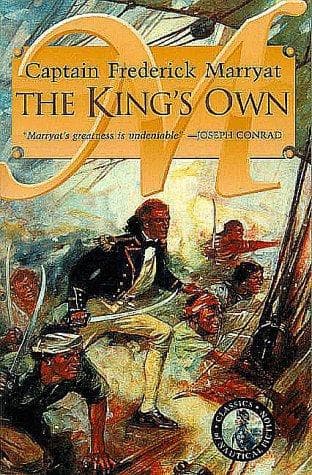
Great Britain -- History, Naval -- 18th century -- Fiction; Nore Mutiny, 1797 -- Fiction
"They are, indeed," replied old Hornblow, delighted at the happy face of
his daughter;--"but I should like some tea, Susan--I am not used to so
much jumbling. I feel tired, and shall go to bed early."
Tea was accordingly prepared; soon after which, the old gentleman rose
to retire.
"Well," said he, as he lighted his chamber candle, "I suppose I am
settled here for life; but I hardly know what to do with myself. I must
make acquaintance with all the flowers and all the trees: the budding of
the spring will make me think of grandchildren; the tree, clothed in its
beauty, of you; and the fall of the leaf, of myself. I must count the
poultry, and look after the pigs, and see the cows milked. I was fond
of the little parlour in Cateaton-street, because I had sat in it so
long; and I suppose that I shall get fond of this place too, if I find
enough to employ and amuse me. But you must be quick and give me a
grandchild, Susan, and then I shall nurse him all day long. Good
night--God bless you, my dear, good night."
"Good night, my dear sir," replied Susan, who had coloured deeply at the
request which he had made.
"Good night, McElvina, my boy; this is the first night we pass under
this roof; may we live many happy years in it;" and old Hornblow left
the room, and ascended the stairs. McElvina had encircled Susan's waist
with his arm, and was probably about to utter some wish in unison with
that of her father, when the noise of a heavy fall sounded in their
ears.
"Good Heaven!" cried Susan, "it is my father who has fallen down
stairs."
McElvina rushed out; it was but too true. The stair-carpet had not yet
been laid down, and his foot had slipped at the uppermost step. He was
taken up senseless, and when medical advice was procured, his head and
his spine were found to be seriously injured. In a few days, during
which he never spoke, old Hornblow was no more. Thus the old man, like
the prophet of old, after all his toiling, was but permitted to see the
promised land; and thus are our days cut short at the very moment of
realising our most sanguine expectations.
Reader, let us look at home. Shall I, now thoughtlessly riding upon the
agitated billow, with but one thin plank between me and death, and yet
so busy with this futile work, be permitted to bring it to a close? The
hand which guides the flowing pen may to-morrow be stiff; the head now
teeming with its subject may be past all thought ere to-morrow's sun is
set--ay, sooner! And you, reader, who may so far have had the courage
to proceed in the volumes without throwing them away, shall you be
permitted to finish your more trifling task?--or, before its close, be
hurried from this transitory scene where fiction ends, and the spirit,
re-endowed, will be enabled to raise its eyes upon the lightning beams
of unveiled truth?
CHAPTER THIRTY.
And if you chance his shipp to borde,
This counsel I must give withall.
BALLAD OF SIR ANDREW BARTON, 1560.
Public-domain text, read in full here on John Shaqi.
Reviews
Reviews
No reviews yet
Be the first to share your thoughts on this work.
Elsewhere in the archive
Join the Discussion
Join the discussion
Sign in to leave a comment or review.
Sign InorCreate an account