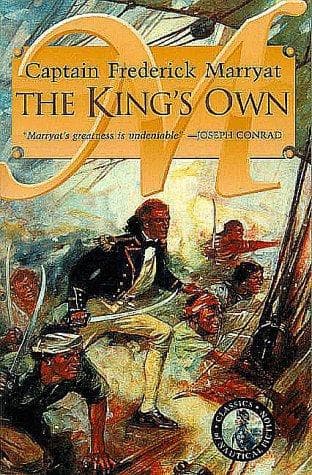
Great Britain -- History, Naval -- 18th century -- Fiction; Nore Mutiny, 1797 -- Fiction
but, alas! in neither case did I profit by their example.
"Now, Freddy," the old lady would say, giving her spectacles a
preparatory wipe, as she basked in a summer evening's sun, after a five
o'clock tea, "fetch a piece of bread and butter, and we will see the
ants work. Lord bless the boy, if he hasn't thrown down a whole slice.
Why do you waste good victuals in that way? Who do you think's to eat
it, after it has been on the gravel? There, pinch a bit off and throw
it down. Put the rest back upon the plate--it will do for the cat."
But these ants were no more to be compared to mine, than a common
labourer is to the engineer who directs the mechanical powers which
raise mountains from their foundation. My old grandmother would never
let me escape until the bread and butter was in the hole, and, what was
worse, I had then to listen to the moral inference which was drawn, and
which took up more time than the ants did to draw the bread and butter--
all about industry, and what not; a long story, partly her own, partly
borrowed from Solomon; but it was labour in vain. I could not
understand why, because ants like bread and butter, I must like my book.
She was an excellent old woman; but nevertheless, many a time did I
have a fellow-feeling with the boy in the caricature print, who is
sitting with his old grandmother and the cat, and says, "I wish one of
us three were dead. It an't I--and it an't you, pussy."
Well, she died at last, full of years and honour; and I was summoned
from school to attend her funeral. My uncle was much affected, for she
had been an excellent mother. She might have been so; but I, graceless
boy, could not perceive her merits as a _grandmother_, and showed a
great deal of fortitude upon the occasion. I recollect a circumstance
attendant upon her funeral which, connected as it was with a subsequent
one, has since been the occasion of serious reflection upon the trifling
causes which will affect the human mind, when prostrate under
affliction. My grandmother's remains were consigned to an old family
vault, not far from the river. When the last ceremonies had been paid,
and the coffin was being lowered into the deep receptacle of generations
which had passed away, I looked down, and it was full of water, nearly
up to the arch of the vault. Observing my surprise, and perceiving the
cause, my uncle was much annoyed at the circumstance; but it was too
late the cords had been removed, and my grandmother had sunk to the
bottom. My uncle interrogated the sexton after the funeral service was
over.
"Why, sir, it's because it's high-water now in the river; she will be
all dry before the evening."
This made the matter worse. If she was all a-dry in the evening, she
would be all afloat again in the morning. It was no longer a place of
rest, and my uncle's grief was much increased by the idea. For a long
while afterwards he appeared uncommonly thoughtful at spring tides.
Public-domain text, read in full here on John Shaqi.
Reviews
Reviews
No reviews yet
Be the first to share your thoughts on this work.
Elsewhere in the archive
Join the Discussion
Join the discussion
Sign in to leave a comment or review.
Sign InorCreate an account