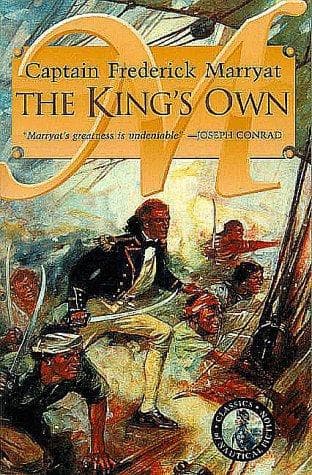
Great Britain -- History, Naval -- 18th century -- Fiction; Nore Mutiny, 1797 -- Fiction
The next morning, Seymour, Courtenay, and Macallan went on shore to meet
an old acquaintance of the latter, who had called upon him on his
arrival. By his advice they left the ship before the sun had risen,
that they might be enabled to walk about, and view the town and its
environs, without being incommoded by the heat. They reached the long
plain close to the sea, upon which the admiral and many others,
according to the custom of the English inhabitants, were residing in
capacious tents; not such tents as have been seen in England, but
impervious to the heat and rain, covering a large extent of ground,
divided into several apartments, and furnished like any other residence.
The broad expanse of ocean, which met their view, was unruffled, and
the beach was lined with hundreds, standing on their carpets, spread
upon the sand, with their faces turned toward the east. As the sun rose
in splendour above the horizon, they all prostrated themselves in mute
adoration, and continued in that position until his disk had cleared the
water's edge; they then rose, and throwing a few flowers into the
rippling wave, folded up their carpets and departed.
"Who are those people, and of what religion?" demanded Seymour.
"They are Parsees, a remnant of the ancient Persians--the Guebres, or
worshippers of fire. As you have witnessed, they also adore the sun.
They came here long since to enjoy their tenets, free from persecution.
They are the most intelligent race that we have. Many of them were
princes in their own country, and are now men of unbounded wealth. They
have their temples here, in which the sacred fire is never permitted to
go out. If, by any chance or negligence, it should become extinct, it
must be relighted from heaven alone. We have no lightning here, and
they send to Calcutta, where there is plenty at the change of the
monsoon, and bring it round with great ceremony."
"In other points, are their customs different from the Hindoos?"
"Yes; their women are not so immured; you will meet plenty of them when
you return to town. They are easily distinguished by their fair
complexions, and the large thin gold rings, with three or four pearls
strung upon them, worn in a hole perforated through the nostril, and
hanging below their mouths."
"And what are those immense towers on the other side of the bay?"
"They were built by the Parsees, as depositories for the dead; on the
summit is a wide iron grating, upon which the bodies are laid, to be
devoured by the birds of prey; when stripped, the bones fall through the
iron bars into the receptacle below. They never bury their dead.--But
breakfast must be ready, so we had better return. You have much to see
here. The caves of Elephanta and Canara are well worthy of your
attention--and I shall be happy to attend you, when you feel inclined to
pay a visit to them."
Public-domain text, read in full here on John Shaqi.
Reviews
Reviews
No reviews yet
Be the first to share your thoughts on this work.
Elsewhere in the archive
Join the Discussion
Join the discussion
Sign in to leave a comment or review.
Sign InorCreate an account