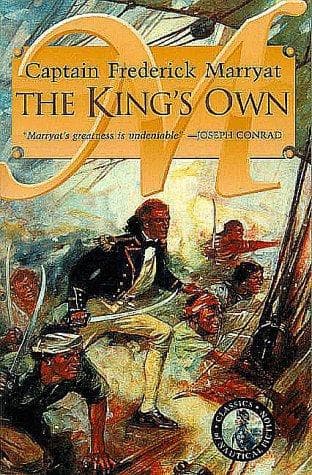
Great Britain -- History, Naval -- 18th century -- Fiction; Nore Mutiny, 1797 -- Fiction
_La Belle Susanne_ was as renowned for her fast sailing, and repeated
escapes from the cruisers, as Captain McElvina and his crew were for
their courage and success. The capture of the vessel had long been a
desideratum of the English Government; and Captain M---, although
gratified at her falling into his hands, was not very well pleased to
find that a lad, whom he had intended to bring forward in the service
should, as he supposed, have voluntarily joined a party, who had so long
bid defiance to the laws and naval force of the country. His
countenance assumed an air of displeasure, and he was about to turn
away, without any further remarks, when McElvina, who perceived how
matters stood, and felt aware that Willy's future prospects were at
stake, stepped forward, and respectfully addressing the captain,
narrated in few words the rescue of Willy from the wreck, and added that
the boy had been detained by him, and had had no opportunity of leaving
the vessel, which had never anchored but in the French port of Havre.
He also stated, what was indeed true, that he had always evaded
explaining to the boy the real nature of the service upon which the
lugger was employed; from which it may be inferred that, notwithstanding
McElvina's defence of smuggling in our former chapters, he was not quite
so well convinced, in his own mind, of its propriety as he would have
induced Debriseau to suppose.
The assertions of McElvina turned the scale again in Willy's favour;
and, after he had answered the interrogatories of the captain, relative
to the fate of Mr Bullock and the rest of the men in the prize, Captain
M---, who, although severe, was not only just, but kind-hearted,
determined that his former good intentions relative to our hero should
still remain in force.
"Well, Mr Seymour, you have seen a little service, and your captain
gives you a high character, as an active and clever lad. As you have
been detained against your will, I think we may recover your time and
pay. I trust, however, that you will, in future, be employed in a more
honourable manner. We shall, in all probability, be soon in port, and
till then you must remain as you are, for I cannot trust you again in a
prize."
As our hero was in a new ship, the officers and ship's company of which
were not acquainted with his history, except that he had been promoted,
for an act of gallantry, by Captain M---, he was favourably received by
his messmates. The crew of the lugger were detained as prisoners on
board of the frigate, and the vessel in charge of one of the officers
was ordered to keep company, Captain M--- having determined to return
into port, and not wishing to lose sight of his valuable prize.
"You have a very fine ship's company, Captain McElvina," observed
Captain M---. "How many of them are English?"
"About eighty; and as good seamen as ever walked a plank."
Public-domain text, read in full here on John Shaqi.
Reviews
Reviews
No reviews yet
Be the first to share your thoughts on this work.
Elsewhere in the archive
Join the Discussion
Join the discussion
Sign in to leave a comment or review.
Sign InorCreate an account