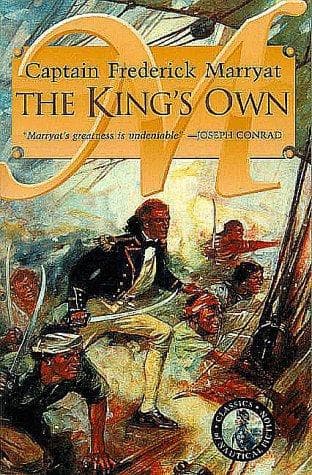
Great Britain -- History, Naval -- 18th century -- Fiction; Nore Mutiny, 1797 -- Fiction
With ordinary minds, there is something so terrible in death, something
so awful in the dissolution of the elements of our frame, something so
horrible in the leap into the dark abyss, that it requires all the
powers of a fortified spirit, all the encouragement of a good
conscience, and all the consolations of religion and of faith, to enable
us to muster any degree of resolution for the awful change. But if
aught can smooth the pillow--can chase away from the terrified spirit
the doubt and depression by which it is overwhelmed, it is the being
surrounded and attended by those who are devoted and endeared to us.
When love, and duty, and charity, and sympathy hover round the couch of
the departing, fainting hope is supported by their presence, and the
fleeting Spirit, directed by them, looks upward to the realms from which
these heaven-born passions have been permitted to descend on earth, to
cheer us through our weary pilgrimage.
What, then, had Admiral De Courcy to support him in his last moments?--A
good conscience?--faith?--hope?--love?--duty?--or even sympathy?--
Wanting all, he breathed his last. But, let us--
Forbear to judge, for we are sinners all;
Close up his eyes, and draw the curtains
close.
And let us all to meditation.
The vicar affixed seals upon the drawers, to secure the remainder of the
property (for the example of the old nurse had been followed by many
others), and, having given directions for the funeral, returned to his
own home.
The second day after the admiral's death, a carriage and four drove
furiously up the avenue and stopped at the entrance door. The occupants
descended, and rang the bells with an air of authority; the summons was
answered by several of the male domestics, who were anxiously looking
out for the new proprietor of the domain. A tall man, of very
gentlemanlike appearance, followed by a mean-looking personage in black,
walked in, the latter as he followed, proclaiming the other to the
servants as the heir-at-law, and present owner of the property. By this
time the whole household were assembled, lining the hall for the
visitors to pass, and bowing and curtseying to the ground. The vicar,
who had expected the appearance of these parties, had left directions
that he might be immediately acquainted with their arrival. On receipt
of the information, he proceeded to the hall, and was ushered into the
library, where he found them anxiously awaiting his arrival, that the
seals might be withdrawn which had been placed upon the drawers.
"Whom have I the honour of addressing, sir?" said the vicar to the
taller of the two, whom he presumed, by his appearance, to be the
superior.
"Sir," replied the little man, in a pompous manner, "you are speaking to
Mr Rainscourt, the heir-at-law, of this entailed property."
Public-domain text, read in full here on John Shaqi.
Reviews
Reviews
No reviews yet
Be the first to share your thoughts on this work.
Elsewhere in the archive
Join the Discussion
Join the discussion
Sign in to leave a comment or review.
Sign InorCreate an account