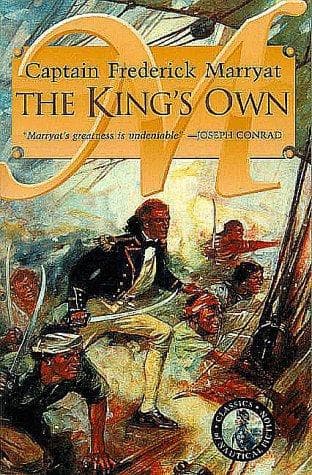
Great Britain -- History, Naval -- 18th century -- Fiction; Nore Mutiny, 1797 -- Fiction
The information received from McElvina, which induced Captain M--- not
to anchor, was relative to a French frigate of the largest class, that
he had great hopes of falling in with. She was lying in the harbour of
Brest, waiting for a detachment of troops which had been ordered to
embark, when she was to sail for Rochefort, to join a squadron intended
to make a descent upon some of our colonies. Previously to McElvina's
sailing from the port of Havre, the prefect of that arrondissement had
issued directions for certain detachments to march on a stated day to
complete the number of troops ordered on board.
McElvina had sure data from which to calculate as to the exact period of
embarkation, and was also aware that the frigate had orders to sail to
the port of rendezvous the first favourable wind after the embarkation
had taken place. In two days the _Aspasia_, for that was the name of
the frigate commanded by Captain M---, was off Ushant, and the captain,
taking the precaution to keep well off the land during the day-time,
only running in to make the lights after dark, retained his position off
that island until the wind shifted to the northward: he then shaped a
course so as to fall in with the French coast about thirty miles to the
southward of the harbour of Brest. It was still dark, when Captain
M---, having run his distance, shortened sail, and hove-to in the
cruising ground which McElvina had recommended; and so correct was the
calculation, as well as the information of the captain of the smugglers,
that at day-break, as the frigate lay with her head in-shore, with the
wind at Nor'-Nor'-West, a large vessel was descried under the land, a
little on her weather-bow. After severely scrutinising the stranger for
some minutes with his glass, which he now handed to McElvina--
"That's she, indeed, I believe," said Captain M---.
"A large frigate, with studding-sails set, standing across our bows,"
cried out the first-lieutenant, from the mast-head.
"She'll try for the Passage du Raz; we must cut her off; if we can.
Hands, make sail."
The hands were summoned up by the shrill pipe of the boatswain and his
mates; but it was quite unnecessary, as the men had already crowded on
deck upon the first report which had been communicated below, and were
in clusters on the forecastle and gangways.
"Topmen, aloft! loose top-gallant sails and royals--clear away the
flying-jib," were orders that were hardly out of the mouth of the
first-lieutenant, breathless with his rapid descent from aloft, when the
gaskets were off; and the sails hung fluttering from the yards. In
another minute the sheets were home, the sails hoisted and trimmed, and
the _Aspasia_ darted through the yielding waves, as if the eagerness of
pursuit which quickened the pulses of her crew had been communicated
from them like an electric shock to her own frame, and she were
conscious that her country demanded her best exertions.
Public-domain text, read in full here on John Shaqi.
Reviews
Reviews
No reviews yet
Be the first to share your thoughts on this work.
Elsewhere in the archive
Join the Discussion
Join the discussion
Sign in to leave a comment or review.
Sign InorCreate an account