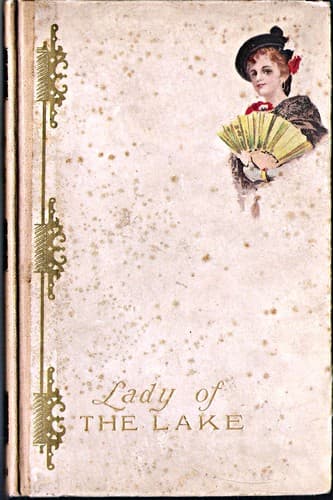
Arthurian romances; Lady of the Lake (Legendary character) -- Romances
On the first of these lines, cf. i. 88 above.
773. Yell. See on 357 above.
774. Bochastle's plain. See on i. 106 above.
Canto Fourth.
2. And hope, etc. The MS. has "And rapture dearest when obscured by
fears."
5. Wilding. Wild; a rare word, used only in poetry. Cf. Tennyson,
Geraint and Enid: "And like a crag was gay with wilding flowers."
Spenser has the noun (= wild apples) in F. Q. iii. 7. 17: "Oft from
the forrest wildings he did bring," etc. Whom is used on account of the
personification.
9. What time. Cf. ii. 307 and iii. 15 above.
19. Braes of Doune. The undulating region between Callander and Doune,
on the north side of the Teith. The Doune of 37 below is the old Castle
of that name, the ruins of which still form a majestic pile on the steep
banks of the Teith. It figures in Waverley as the place where the hero
was confined by the Highlanders.
36. Boune. Prepared, ready; a Scottish word. Cf. 157 and vi. 396 below.
42. Bide. Endure; not to be printed 'bide, as if a contraction of
abide. Cf. Shakespeare, Lear, iii. 4. 29: "That bide the pelting of this
pitiless storm," etc.
Bout. Turn (of fortune).
47. Repair. That is, to repair.
55. 'T is well advised. Well thought of, well planned. Cf. advised
careful, well considered; as in M. of V. i. 1. 142: "with more advised
watch," etc.
The MS. reads:
"'Tis well advised--a prudent plan,
Worthy the father of his clan."
59. Evening-tide. See on iii. 478 above.
63. The Taghairm. Scott says here: "The Highlanders, like all rude
people, had various superstitious modes of inquiring into futurity. One
of the most noted was the Taghairm, mentioned in the text. A person was
wrapped up in the skin of a newly-slain bullock, and deposited beside
a waterfall, or at the bottom of a precipice, or in some other strange,
wild, and unusual situation, where the scenery around him suggested
nothing but objects of horror. In this situation, he revolved in his
mind the question proposed; and whatever was impressed upon him by
his exalted imagination, passed for the inspiration of the disembodied
spirits, who haunt these desolate recesses. In some of the Hebrides
they attributed the same oracular power to a large black stone by
the sea-shore, which they approached with certain solemnities, and
considered the first fancy which came into their own minds, after they
did so, to be the undoubted dictate of the tutelar deity of the stone,
and, as such, to be, if possible, punctually complied with."
Public-domain text, read in full here on John Shaqi.
Reviews
Reviews
No reviews yet
Be the first to share your thoughts on this work.
Elsewhere in the archive
Join the Discussion
Join the discussion
Sign in to leave a comment or review.
Sign InorCreate an account