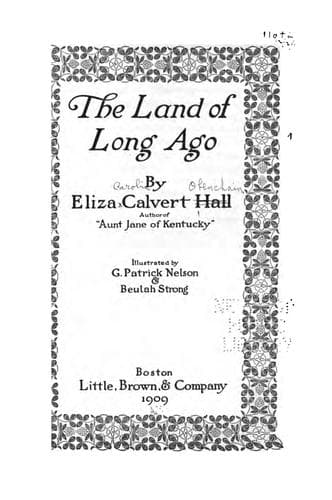
Kentucky -- Fiction; Older women -- Fiction; Widows -- Fiction
A frost so light that it was hardly more than a cold dew had rested
that morning on the early chrysanthemums and late roses; but the wind
that shook the leaves from the crimson maples was a south wind; the
midday sun held the tropic warmth of August, and over the brightening
hills lay a tender, purple haze. Summer was dead, but its gentle ghost
had come back to the earth, and it was Indian summer, the season that
has no name or place in any calendar but the poet's. The sun had set,
and the mist that veiled the horizon had caught its last rays, holding
the light lingeringly, fondly, in its folds and spreading it far to
the north and south in a soft splendor of color that no other season
can show. Not pink, not crimson, but such a color as an artist might
make if he crushed together on his palette the rose of summer and the
leaf of autumn. The chill of the coming night was in the air, but
still we lingered at the gate, Aunt Jane and I, with our faces toward
the west.
"I wonder how many folks are watchin' this sunset," she remarked at
last. "Old Job Matthews, after he got converted at the big revival
back yonder in the thirties, used to look for the second comin' of the
Lord, and every sunset and sunrise he'd stand and look at the sky and
say, 'Maybe the King of Glory is at hand.' Once the old man declared
he saw a chariot in the clouds, and it does look like, child, that
somethin' ought to happen after a sight like this, or else it ain't
worth while to git it up jest for a few people like you and me to look
at."
As she spoke there was a quick, sharp clang of hoofs on the
macadamized road, and a horse and rider passed in the twilight. The
clean, even gait of the horse and the outlines of its head showed it
to be of noble blood; and as it trotted past with an air of proud
alertness, we could see that the dumb animal realized the double share
of responsibility laid upon it. For the hand that held the bridle was
limp and nerveless, the rider's head was sunk on his breast, and the
brain of the man that should have guided the brain of the horse was
locked in a poison-stupor.
Long and wistfully Aunt Jane gazed after the horse and its rider, and
the gathering darkness could not hide the divine sorrow and pity that
looked out from her aged eyes. Sighing heavily she turned from the
gate, and we went back to the shadowy room where the "unlit lamp" and
the unkindled fire lay ready for the evening hours.
The fireplace was filled with brush cleared that day from the
flower-beds, dry stems that had borne the verdure and bloom of a
spring and now lay on their funeral pyre, ready to be translated, as
by a chariot of fire, into the elemental air and earth from whence
they had sprung.
Aunt Jane struck a match under the old mantel and, stooping, touched
the dead mass with the finger of flame.
Public-domain text, read in full here on John Shaqi.
Reviews
Reviews
No reviews yet
Be the first to share your thoughts on this work.
Elsewhere in the archive
Join the Discussion
Join the discussion
Sign in to leave a comment or review.
Sign InorCreate an account