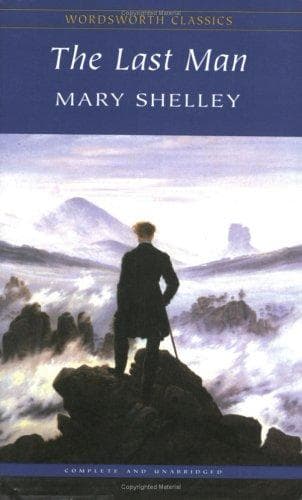
End of the world -- Fiction; Epidemics -- Fiction; Science fiction; Twenty-first century -- Fiction
The political state of England became agitated as the time drew near
when the new Protector was to be elected. This event excited the more
interest, since it was the current report, that if the popular
candidate (Ryland) should be chosen, the question of the abolition of
hereditary rank, and other feudal relics, would come under the
consideration of parliament. Not a word had been spoken during the
present session on any of these topics. Every thing would depend upon
the choice of a Protector, and the elections of the ensuing year. Yet
this very silence was awful, shewing the deep weight attributed to the
question; the fear of either party to hazard an ill-timed attack, and
the expectation of a furious contention when it should begin.
But although St. Stephen’s did not echo with the voice which filled
each heart, the newspapers teemed with nothing else; and in private
companies the conversation however remotely begun, soon verged towards
this central point, while voices were lowered and chairs drawn closer.
The nobles did not hesitate to express their fear; the other party
endeavoured to treat the matter lightly. “Shame on the country,” said
Ryland, “to lay so much stress upon words and frippery; it is a
question of nothing; of the new painting of carriage-pannels and the
embroidery of footmen’s coats.”
Yet could England indeed doff her lordly trappings, and be content with
the democratic style of America? Were the pride of ancestry, the
patrician spirit, the gentle courtesies and refined pursuits, splendid
attributes of rank, to be erased among us? We were told that this would
not be the case; that we were by nature a poetical people, a nation
easily duped by words, ready to array clouds in splendour, and bestow
honour on the dust. This spirit we could never lose; and it was to
diffuse this concentrated spirit of birth, that the new law was to be
brought forward. We were assured that, when the name and title of
Englishman was the sole patent of nobility, we should all be noble;
that when no man born under English sway, felt another his superior in
rank, courtesy and refinement would become the birth-right of all our
countrymen. Let not England be so far disgraced, as to have it imagined
that it can be without nobles, nature’s true nobility, who bear their
patent in their mien, who are from their cradle elevated above the rest
of their species, because they are better than the rest. Among a race
of independent, and generous, and well educated men, in a country where
the imagination is empress of men’s minds, there needs be no fear that
we should want a perpetual succession of the high-born and lordly. That
party, however, could hardly yet be considered a minority in the
kingdom, who extolled the ornament of the column, “the Corinthian
capital of polished society;” they appealed to prejudices without
number, to old attachments and young hopes; to the expectation of
thousands who might one day become peers; they set up as a scarecrow,
Public-domain text, read in full here on John Shaqi.
Reviews
Reviews
No reviews yet
Be the first to share your thoughts on this work.
Elsewhere in the archive
Join the Discussion
Join the discussion
Sign in to leave a comment or review.
Sign InorCreate an account