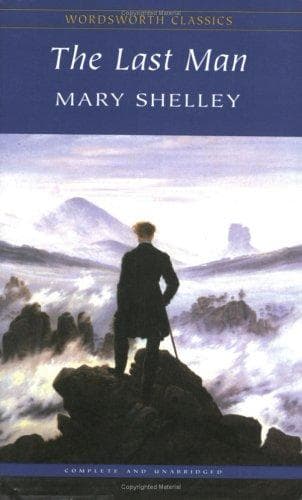
End of the world -- Fiction; Epidemics -- Fiction; Science fiction; Twenty-first century -- Fiction
Once man was a favourite of the Creator, as the royal psalmist sang,
“God had made him a little lower than the angels, and had crowned him
with glory and honour. God made him to have dominion over the works of
his hands, and put all things under his feet.” Once it was so; now is
man lord of the creation? Look at him—ha! I see plague! She has
invested his form, is incarnate in his flesh, has entwined herself with
his being, and blinds his heaven-seeking eyes. Lie down, O man, on the
flower-strown earth; give up all claim to your inheritance, all you can
ever possess of it is the small cell which the dead require. Plague is
the companion of spring, of sunshine, and plenty. We no longer struggle
with her. We have forgotten what we did when she was not. Of old navies
used to stem the giant ocean-waves betwixt Indus and the Pole for
slight articles of luxury. Men made perilous journies to possess
themselves of earth’s splendid trifles, gems and gold. Human labour was
wasted—human life set at nought. Now life is all that we covet; that
this automaton of flesh should, with joints and springs in order,
perform its functions, that this dwelling of the soul should be capable
of containing its dweller. Our minds, late spread abroad through
countless spheres and endless combinations of thought, now retrenched
themselves behind this wall of flesh, eager to preserve its well-being
only. We were surely sufficiently degraded.
At first the increase of sickness in spring brought increase of toil to
such of us, who, as yet spared to life, bestowed our time and thoughts
on our fellow creatures. We nerved ourselves to the task: “in the midst
of despair we performed the tasks of hope.” We went out with the
resolution of disputing with our foe. We aided the sick, and comforted
the sorrowing; turning from the multitudinous dead to the rare
survivors, with an energy of desire that bore the resemblance of power,
we bade them—live. Plague sat paramount the while, and laughed us to
scorn.
Have any of you, my readers, observed the ruins of an anthill
immediately after its destruction? At first it appears entirely
deserted of its former inhabitants; in a little time you see an ant
struggling through the upturned mould; they reappear by twos and
threes, running hither and thither in search of their lost companions.
Such were we upon earth, wondering aghast at the effects of pestilence.
Our empty habitations remained, but the dwellers were gathered to the
shades of the tomb.
Public-domain text, read in full here on John Shaqi.
Reviews
Reviews
No reviews yet
Be the first to share your thoughts on this work.
Elsewhere in the archive
Join the Discussion
Join the discussion
Sign in to leave a comment or review.
Sign InorCreate an account