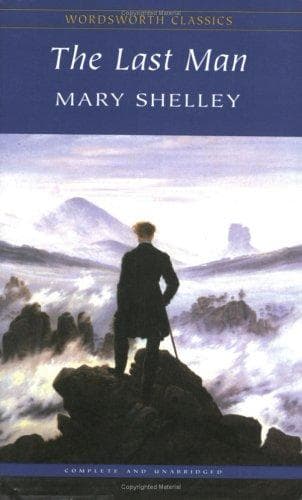
End of the world -- Fiction; Epidemics -- Fiction; Science fiction; Twenty-first century -- Fiction
Farewell to the arts,—to eloquence, which is to the human mind as the
winds to the sea, stirring, and then allaying it;—farewell to poetry
and deep philosophy, for man’s imagination is cold, and his enquiring
mind can no longer expatiate on the wonders of life, for “there is no
work, nor device, nor knowledge, nor wisdom in the grave, whither thou
goest!”—to the graceful building, which in its perfect proportion
transcended the rude forms of nature, the fretted gothic and massy
saracenic pile, to the stupendous arch and glorious dome, the fluted
column with its capital, Corinthian, Ionic, or Doric, the peristyle and
fair entablature, whose harmony of form is to the eye as musical
concord to the ear!—farewell to sculpture, where the pure marble mocks
human flesh, and in the plastic expression of the culled excellencies
of the human shape, shines forth the god!—farewell to painting, the
high wrought sentiment and deep knowledge of the artists’s mind in
pictured canvas—to paradisaical scenes, where trees are ever vernal,
and the ambrosial air rests in perpetual glow:—to the stamped form of
tempest, and wildest uproar of universal nature encaged in the narrow
frame, O farewell! Farewell to music, and the sound of song; to the
marriage of instruments, where the concord of soft and harsh unites in
sweet harmony, and gives wings to the panting listeners, whereby to
climb heaven, and learn the hidden pleasures of the eternals!—Farewell
to the well-trod stage; a truer tragedy is enacted on the world’s ample
scene, that puts to shame mimic grief: to high-bred comedy, and the low
buffoon, farewell!—Man may laugh no more. Alas! to enumerate the
adornments of humanity, shews, by what we have lost, how supremely
great man was. It is all over now. He is solitary; like our first
parents expelled from Paradise, he looks back towards the scene he has
quitted. The high walls of the tomb, and the flaming sword of plague,
lie between it and him. Like to our first parents, the whole earth is
before him, a wide desart. Unsupported and weak, let him wander through
fields where the unreaped corn stands in barren plenty, through copses
planted by his fathers, through towns built for his use. Posterity is
no more; fame, and ambition, and love, are words void of meaning; even
as the cattle that grazes in the field, do thou, O deserted one, lie
down at evening-tide, unknowing of the past, careless of the future,
for from such fond ignorance alone canst thou hope for ease!
Joy paints with its own colours every act and thought. The happy do not
feel poverty—for delight is as a gold-tissued robe, and crowns them
with priceless gems. Enjoyment plays the cook to their homely fare, and
mingles intoxication with their simple drink. Joy strews the hard couch
with roses, and makes labour ease.
Public-domain text, read in full here on John Shaqi.
Reviews
Reviews
No reviews yet
Be the first to share your thoughts on this work.
Elsewhere in the archive
Join the Discussion
Join the discussion
Sign in to leave a comment or review.
Sign InorCreate an account