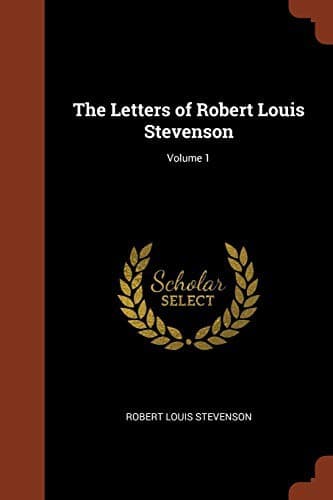
The Letters of Robert Louis Stevenson — Volume 1Stevenson, Robert Louis
General
The Letters of Robert Louis Stevenson — Volume 1
Stevenson, Robert Louis
Authors, Scottish -- 19th century -- Correspondence; Stevenson, Robert Louis, 1850-1894 -- Correspondence
R. L. S.
TO MRS. THOMAS STEVENSON
_Christmas Sermon_.
[_Hotel Belvedere_, _Davos_, _December_ 26, 1880.]
MY DEAR MOTHER,—I was very tired yesterday and could not write;
tobogganed so furiously all morning; we had a delightful day, crowned by
an incredible dinner—more courses than I have fingers on my hands. Your
letter arrived duly at night, and I thank you for it as I should. You
need not suppose I am at all insensible to my father’s extraordinary
kindness about this book; he is a brick; I vote for him freely.
. . . The assurance you speak of is what we all ought to have, and might
have, and should not consent to live without. That people do not have it
more than they do is, I believe, because persons speak so much in
large-drawn, theological similitudes, and won’t say out what they mean
about life, and man, and God, in fair and square human language. I
wonder if you or my father ever thought of the obscurities that lie upon
human duty from the negative form in which the Ten Commandments are
stated, or of how Christ was so continually substituting affirmations.
‘Thou shalt not’ is but an example; ‘Thou shalt’ is the law of God. It
was this that seems meant in the phrase that ‘not one jot nor tittle of
the law should pass.’ But what led me to the remark is this: A kind of
black, angry look goes with that statement of the law of negatives. ‘To
love one’s neighbour as oneself’ is certainly much harder, but states
life so much more actively, gladly, and kindly, that you begin to see
some pleasure in it; and till you can see pleasure in these hard choices
and bitter necessities, where is there any Good News to men? It is much
more important to do right than not to do wrong; further, the one is
possible, the other has always been and will ever be impossible; and the
faithful _design to do right_ is accepted by God; that seems to me to be
the Gospel, and that was how Christ delivered us from the Law. After
people are told that, surely they might hear more encouraging sermons.
To blow the trumpet for good would seem the Parson’s business; and since
it is not in our own strength, but by faith and perseverance (no account
made of slips), that we are to run the race, I do not see where they get
the material for their gloomy discourses. Faith is not to believe the
Bible, but to believe in God; if you believe in God (or, for it’s the
same thing, have that assurance you speak about), where is there any more
room for terror? There are only three possible attitudes—Optimism, which
has gone to smash; Pessimism, which is on the rising hand, and very
popular with many clergymen who seem to think they are Christians. And
this Faith, which is the Gospel. Once you hold the last, it is your
business (1) to find out what is right in any given case, and (2) to try
Public-domain text, read in full here on John Shaqi.
Reviews
Reviews
No reviews yet
Be the first to share your thoughts on this work.
Elsewhere in the archive
Join the Discussion
Join the discussion
Sign in to leave a comment or review.
Sign InorCreate an account