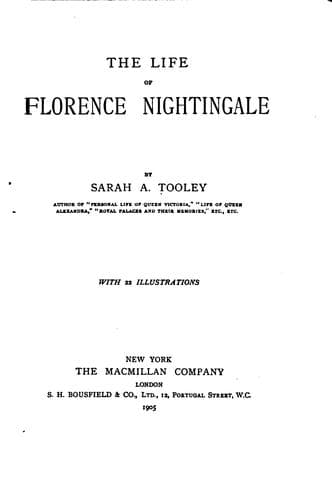
Nightingale, Florence, 1820-1910; Nurses -- England -- Biography
The defective system of orderlies was another evil which the
Lady-in-Chief had to contend with. These men had been taken from the
ranks, most of them were convalescents, and they did not trouble to
understand the duties of an orderly because they were liable to return
and serve in the ranks. The advent of the ladies had an excellent
effect upon the orderlies in arousing their sense of chivalry, and they
soon grew to think it an honour to serve the Lady-in-Chief. During all
that dreadful period, when she had to tax the patience and devotion of
the orderlies and other soldiers attending in the wards to the utmost,
not one of them failed her “in obedience, thoughtful attention, and
considerate delicacy.” For her they toiled and endured a strain and
stress of work which mere officialdom would have failed to obtain. Yet
“never,” Miss Nightingale says, “came from any one of them one word
nor one look which a gentleman would not have used; and while paying
this humble tribute to humble courtesy, the tears come into my eyes as
I think how amidst scenes of loathsome disease and death there arose
above it all the innate dignity, gentleness, and chivalry of the men
(for never surely was chivalry so strikingly exemplified), shining in
the midst of what must be considered as the lowest sinks of human
misery, and preventing instinctively the use of one expression which
could distress a gentlewoman.”
If such was the chivalrous devotion yielded by the orderlies and
convalescent soldiers, it can readily be understood that the prostrate
sufferers worshipped the Lady-in-Chief. Her presence in the operating
room acted like magic. Case after case became amenable to the surgeon
under the calming influence of her presence. It is not surprising that
men prostrate with weakness and agonised with pain often rebelled
against an operation. Anæsthetics were not administered as freely then
as they are to-day, and many brave fellows craved death rather than
meet the surgeon’s knife. But when they felt the pitying eyes of the
Lady-in-Chief fixed upon them, saw her gentle face, heard her soothing
words of comfort and hope for the future, and were conscious that she
had set herself to bear the pain of witnessing pain, the men would obey
her silent command, and submit and endure, strengthened by her presence.
Those who at first were inclined to cavil at the power which the
Government had placed in the hands of the Lady-in-Chief speedily
reversed their judgment, as day by day they witnessed her strength of
character and her amazing fortitude and self-control in the midst of
scenes which tried the strongest men.
The magnitude of Miss Nightingale’s work in the hospital wards has
caused historians to overlook the womanly help and sympathy which she
gave to the soldiers’ wives who had come out with their husbands. Even
Kinglake, who is unsurpassed in his admiration for the Lady-in-Chief,
does not mention this side of her work.
Public-domain text, read in full here on John Shaqi.
Reviews
Reviews
No reviews yet
Be the first to share your thoughts on this work.
Elsewhere in the archive
Join the Discussion
Join the discussion
Sign in to leave a comment or review.
Sign InorCreate an account