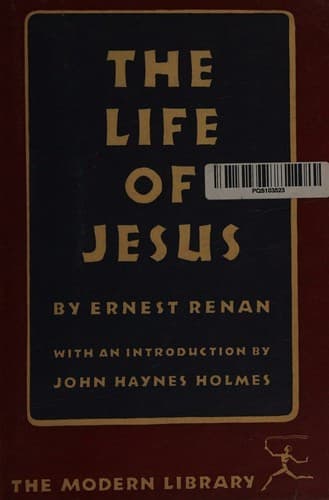
Christian biography -- Palestine; Jesus Christ -- Biography
A total indifference to exterior life and the vain appanage of the
"comfortable," which our drearier countries make necessary to us, was
the consequence of the sweet and simple life lived in Galilee. Cold
climates, by compelling man to a perpetual contest with external
nature, cause too much value to be attached to researches after
comfort and luxury. On the other hand, the countries which awaken few
desires are the countries of idealism and of poesy. The accessories of
life are there insignificant compared with the pleasure of living. The
embellishment of the house is superfluous, for it is frequented as
little as possible. The strong and regular food of less generous
climates would be considered heavy and disagreeable. And as to the
luxury of garments, what can rival that which God has given to the
earth and the birds of heaven? Labor in climates of this kind appears
useless; what it gives is not equal to what it costs. The animals of
the field are better clothed than the most opulent man, and they do
nothing. This contempt, which, when it is not caused by idleness,
contributes greatly to the elevation of the soul, inspired Jesus with
some charming apologues: "Lay not up for yourselves treasures upon
earth," said he, "where moth and rust doth corrupt, and where thieves
break through and steal, but lay up for yourselves treasures in
heaven, where neither moth nor rust doth corrupt, and where thieves do
not break through nor steal: for where your treasure is, there will
your heart be also.[1] No man can serve two masters: for either he
will hate the one and love the other; or else he will hold to one and
despise the other. Ye cannot serve God and Mammon.[2] Therefore I say
unto you, take no thought for your life, what ye shall eat, or what ye
shall drink; nor yet for your body, what ye shall put on. Is not the
life more than meat, and the body than raiment? Behold the fowls of
the air: for they sow not, neither do they reap, nor gather into
barns; yet your heavenly Father feedeth them. Are ye not much better
than they? Which of you by taking thought can add one cubit unto his
stature? And why take ye thought for raiment? Consider the lilies of
the field, how they grow; they toil not, neither do they spin; and yet
I say unto you, That even Solomon in all his glory was not arrayed
like one of these. Wherefore, if God so clothe the grass of the field,
which to-day is, and to-morrow is cast into the oven, shall he not
much more clothe you, O ye of little faith? Therefore take no thought,
saying, What shall we eat? or, What shall we drink? or, Wherewithal
shall we be clothed? For after all these things do the Gentiles seek;
for your heavenly Father knoweth that ye have need of all these
things. But seek ye first the kingdom of God,[3] and his
righteousness; and all these things shall be added unto you. Take
therefore no thought for the morrow: for the morrow shall take thought
of the things of itself. Sufficient unto the day is the evil
Public-domain text, read in full here on John Shaqi.
Reviews
Reviews
No reviews yet
Be the first to share your thoughts on this work.
Elsewhere in the archive
Join the Discussion
Join the discussion
Sign in to leave a comment or review.
Sign InorCreate an account