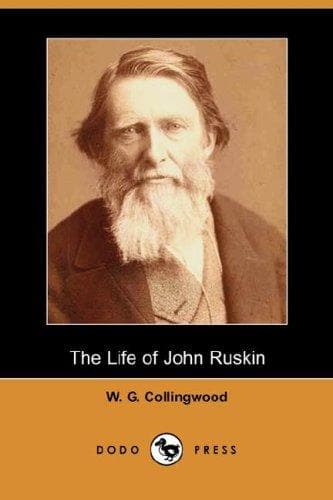
The Life of John RuskinCollingwood, W. G. (William Gershom)
Philosophy
The Life of John Ruskin
Collingwood, W. G. (William Gershom)
Authors, English -- 19th century -- Biography; Ruskin, John, 1819-1900
Meanwhile the war was raging. Ruskin was asked by his friends to raise
his voice against the ravage of France; but he replied that it was
inevitable. At last, in October, he read how Rosa Bonheur and Edouard
Frère had been permitted to pass through the German lines, and next day
came the news of the bombardment of Strasburg, with anticipations of the
destruction of the Cathedral, library, and picture galleries,
foretelling, as it seemed, the more terrible and irreparable ruin of the
treasure-houses of art in Paris. His heart was with the French, and he
broke silence in the bitterness of his spirit, upbraiding their
disorder and showing how the German success was the victory of "one of
the truest monarchies and schools of honour and obedience yet organised
under heaven." He hoped that Germany, now that she had shown her power,
would withdraw, and demand no indemnity. But that was too much to ask.
Before long Paris itself became the scene of action, and in January 1871
was besieged and bombarded. So much of Ruskin's work and affection had
been given to French Gothic that he could not endure to think of his
beloved Sainte Chapelle as being actually under fire--to say nothing of
the horror of human suffering in a siege. He joined Cardinal (then
Archbishop) Manning, Professor Huxley, Sir John Lubbock and James
Knowles in forming a "Paris Food Fund," which shortly united with the
Lord Mayor's committee for the general relief of the besieged. The day
after writing on the Sainte Chapelle he attended the meeting of the
Mansion House, and gave a subscription of £50. He followed events
anxiously through the storm of the Commune and its fearful ending,
angered at the fratricide and anarchy which no Mansion House help could
avert or repair.
It was no time for talking on art, he felt: instead of the full course,
he could only manage three lectures on landscape, and these not so
completely prepared as to make them ready for printing. Before Christmas
he had been once more to Woolwich, where Colonel Brackenbury invited him
to address the cadets at the prize-giving of the Science and Art
Department, December 13, 1870, in which the Rev. W. Kingsley, an old
friend of Ruskin's and of Turner's, was one of the masters. Two of the
lectures of the "Crown of Wild Olive" had been given there, with more
than usual animation, and enthusiastically received by crowded and
distinguished audiences, among whom was Prince Arthur (the Duke of
Connaught), then at the Royal Military Academy. This time it was the
"Story of Arachne," an address on education and aims in life; opening
with reminiscences of his own childhood, and pleasantly telling the
Greek myths of the spider and the ant, with interpretations for the
times.
Public-domain text, read in full here on John Shaqi.
Reviews
Reviews
No reviews yet
Be the first to share your thoughts on this work.
Elsewhere in the archive
Join the Discussion
Join the discussion
Sign in to leave a comment or review.
Sign InorCreate an account