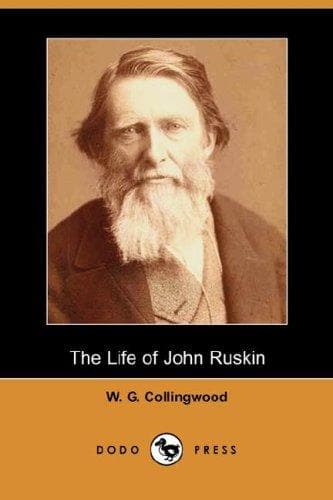
The Life of John RuskinCollingwood, W. G. (William Gershom)
Philosophy
The Life of John Ruskin
Collingwood, W. G. (William Gershom)
Authors, English -- 19th century -- Biography; Ruskin, John, 1819-1900
At Rome they visited old Mr. Severn, and then went homeward by way of
Verona, where Ruskin wrote an account of the Cavalli monuments for the
Arundel society, and Venice, where he returned to the study of
Carpaccio. At Rome he had been once more to the Sistine, and found that
on earlier visits the ceiling and the Last Judgment had taken his
attention too exclusively. Now that he could look away from Michelangelo
he become conscious of the claims of Botticelli's frescoes, which
represent, in the Florentine school, somewhat the same kind of interest
that he had found in Carpaccio. He became enamoured of Botticelli's
Zipporah, and resolved to study the master more closely. On reaching
home he had to prepare "The Eagle's Nest" for publication; in the
preface he gave special importance to Botticelli, and amplified it in
lectures on early engraving, that Autumn;[27] in which I remember his
quoting with appreciation the passage on the Venus Anadyomene from
Pater's "Studies in the Renaissance" just published.
[Footnote 27: "Ariadne Florentina," delivered on Nov. 2, 9, 16, 23, 30,
and Dec. 7, and repeated on the following Thursdays. Ruskin's first
mention of Botticelli was in the course on Landscape, Lent Term, 1871.]
This sudden enthusiasm about an unknown painter amused the Oxford
public: and it became a standing joke among the profane to ask who was
Ruskin's last great man. It was in answer to that, and in expression of
a truer understanding than most Oxford pupils attained, that Bourdillon
of Worcester wrote on "the Ethereal Ruskin,"--that was Carlyle's name
for him:--
"To us this star or that seems bright,
And oft some headlong meteor's flight
Holds for awhile our raptured sight.
"But he discerns each noble star;
The least is only the most far,
Whose worlds, may be, the mightiest are."
The critical value of this course however, to a student of art-history,
is impaired by his using as illustrations of Botticelli, and of the
manner of engraving which he took for standard, certain plates which
were erroneously attributed to the artist. "It is strange," he wrote in
despair to Professor Norton, "that I hardly ever get anything stated
without some grave mistake, however true in my main discourse." But in
this case a fate stronger than he had taken him unawares. The
circumstances do not extenuate the error of the Professor, but they
explain the difficulties under which his work was done. The cloud that
rested on his own life was the result of a strange and wholly unexpected
tragedy in another's.
Public-domain text, read in full here on John Shaqi.
Reviews
Reviews
No reviews yet
Be the first to share your thoughts on this work.
Elsewhere in the archive
Join the Discussion
Join the discussion
Sign in to leave a comment or review.
Sign InorCreate an account