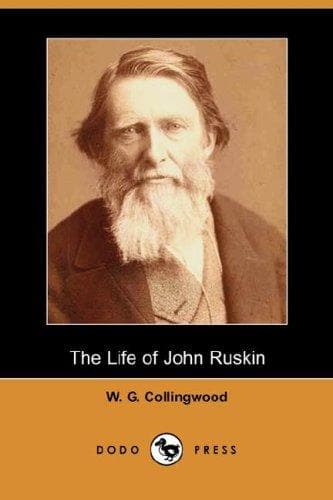
The Life of John RuskinCollingwood, W. G. (William Gershom)
Philosophy
The Life of John Ruskin
Collingwood, W. G. (William Gershom)
Authors, English -- 19th century -- Biography; Ruskin, John, 1819-1900
"Yesterday I had two lovely services in my own cathedral. You know
the _Cathedral_ of Oxford is the chapel of Christ Church College,
and I have my high seat in the chancel, as an honorary student,
besides being bred there, and so one is ever so proud and ever so
pious all at once, which is ever so nice you know: and my own dean,
that's the Dean of Christ Church, who is as big as any bishop, read
the services, and the psalms and anthems were lovely; and then I
dined with Henry Acland and his family ... but I do wish I could be
at Brantwood too." Next day it was "Cold quite gone."
But he was not to be quit so easily this time of the results of overwork
and worry.
He had been passing through the unpleasant experience of a
misunderstanding with one of his most trusted friends and helpers. His
work on behalf of the St. George's Guild had been energetic and sincere:
and he had received the support of a number of strangers, among whom
were people of responsible station and position. But he was surprised to
find that many of his personal friends held aloof. He was still more
surprised to learn, on returning from Venice, full of new hope and
stronger convictions in his mission, that the caution of one upon whom
he had counted as a firm ally had dissuaded an intending adherent from
joining in the work. A man of the world, accustomed to overreach and to
be overreached, would have taken the discovery coolly, and accepted an
explanation. But Ruskin was never a man of the world; and now, much less
than ever. He took it as treason to the great work of which he felt
himself to be the missionary. Throughout the autumn and winter the
discovery rankled, and preyed on his mind. As for the sake of absolute
candour he had published in "Fors" everything that related to the Guild
work,--even his own private affairs and confessions, whatever they
risked,--he felt that this too must out; in order that his supporters
might judge of his conduct and that nothing affecting the enterprise
might be kept back. And so, at Christmas, he sent the correspondence to
his printers.
Years afterwards, by the intervention of friends, this breach was
healed: but what suffering it cost can be learnt from the sequel. To
Ruskin it was the beginning of the end. His Aberdeen correspondent asked
just then for the usual Christmas message to the Bible class: and
instead of the cheery words of bygone years, received the couplet from
Horace:
"Inter spem curamque, timores inter et iras,
_Omnem_ crede diem tibi diluxisse supremum."
"Amid hope and sorrow, amid fear and wrath, believe
_every_ day that has dawned on thee to be thy last."
Public-domain text, read in full here on John Shaqi.
Reviews
Reviews
No reviews yet
Be the first to share your thoughts on this work.
Elsewhere in the archive
Join the Discussion
Join the discussion
Sign in to leave a comment or review.
Sign InorCreate an account