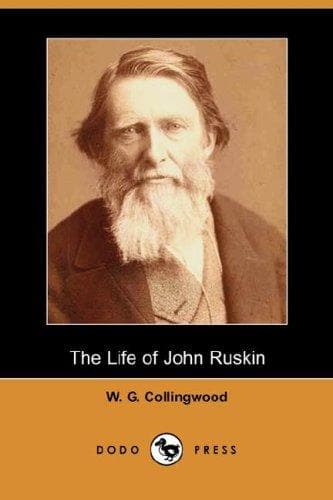
The Life of John RuskinCollingwood, W. G. (William Gershom)
Philosophy
The Life of John Ruskin
Collingwood, W. G. (William Gershom)
Authors, English -- 19th century -- Biography; Ruskin, John, 1819-1900
At breakfast, when you see the post-bag brought in, you understand why
he tries to get his bit of writing done early. The letters and parcels
are piled in the study, and after breakfast, at which, as in old times,
he reads his last-written passages--how much more interesting they will
always look to you in print!--after breakfast he is closeted with an
assistant, and they work through the heap. Private friends, known by
handwriting, he puts aside; most of the morning will go in answering
them. Business he talks over, and gives brief directions. But the bulk
of the correspondence is from strangers in all parts of the
world--admirers' flattery; students' questions; begging-letters for
money, books, influence, advice, autographs, criticism on enclosed MS.
or accompanying picture; remonstrance or abuse from dissatisfied
readers, or people who object to his method of publication, or wish to
convert him to their own religion. And so the heap is gradually cleared,
with the help of the waste-paper basket; the secretary's work cut out,
his own arranged; and by noon a long row of letters and envelopes have
been set out to dry--Mr. Ruskin uses no blotting-paper, and, as he
dislikes the vulgar method of fastening envelopes, the secretary's work
will be to seal them all with red wax, and the seal with the motto
"To-day" cut in the apex of a big specimen of chalcedony.
If you take, as many do, an interest in the minutiæ of portrait
painting, and think the picture more finished for its details, you may
notice that he writes on the flat table, not on a desk; that he uses a
cork penholder and a fine steel pen, though he is not at all a slave to
his tools, and differs from others rather in the absence of the _sine
quâ non_ from his conditions. He can write anywhere, on anything, with
anything; wants no pen-wiper, no special form of paper, or other "fad."
Much of his work is written in bound notebooks, especially when he _is_
abroad, to prevent the loss and disorder of multitudinous foolscap. He
generally makes a rough syllabus of his subject, in addition to copious
notes and extracts from authorities, and then writes straight off; not
without a noticeable hesitation and revision, even in his letters. His
rough copy is transcribed by an assistant, and he often does not see it
again until it is in proof.[45]
[Footnote 45: In later years he sometimes had his copy type-written.]
Public-domain text, read in full here on John Shaqi.
Reviews
Reviews
No reviews yet
Be the first to share your thoughts on this work.
Elsewhere in the archive
Join the Discussion
Join the discussion
Sign in to leave a comment or review.
Sign InorCreate an account