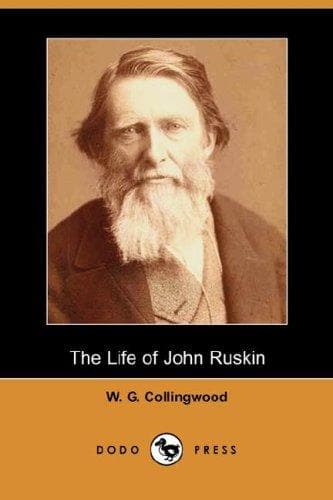
The Life of John RuskinCollingwood, W. G. (William Gershom)
Philosophy
The Life of John Ruskin
Collingwood, W. G. (William Gershom)
Authors, English -- 19th century -- Biography; Ruskin, John, 1819-1900
About this time he was anxious to get the village children taught music
with more accuracy of tune and time than the ordinary singing-lessons
enforced. He made many experiments with different simple instruments,
and fixed at last upon a set of bells, which he wanted to introduce into
the school. But it was difficult to interfere with the routine of
studies prescribed by the Code. Considering that he scorned "the three
R's," a school after his own heart would have been a very different
place from any that earns the Government grant; and he very strongly
believed that if a village child learnt the rudiments of religion and
morality, sound rules of health and manners, and a habit of using its
eyes and ears in the practice of some good handicraft or art and simple
music, and in natural philosophy, taught by object lessons--then
book-learning would either come of itself, or be passed aside as
unnecessary or superfluous. This was his motive in a well-known incident
which has sometimes puzzled his public. Once, when new buildings were
going on, the mason wanted an advance of money, which Mr. Ruskin gave
him, and then held out the paper for him to sign the receipt. "A great
deal of hesitation and embarrassment ensued, somewhat to Mr. Ruskin's
surprise, as he knows a north-country-man a great deal too well to
expect embarrassment from him. At last the man said, in dialect: 'Ah mun
put ma mark!' He could not write. Mr. Ruskin rose at once, stretched out
both hands to the astonished rustic, with the words: 'I am proud to know
you. Now I understand why you are such an entirely good workman.'"
CHAPTER IX
THE STORM-CLOUD (1884-1888)
The sky had been a favourite subject of study with the author of "Modern
Painters." His journals for fifty years past had kept careful account of
the weather, and effects of cloud. He had noticed since 1871 a
prevalence of chilly, dark _bise_, as it would be called in France; but
different in its phenomena from anything of his earlier days. The
"plague wind," so he named it--tremulous, intermittent, blighting grass
and trees--blew from no fixed point of the compass, but always brought
the same dirty sky in place of the healthy rain-cloud of normal summers;
and the very thunder-storms seemed to be altered by its influence into
foul and powerless abortions of tempest. We should now be disposed to
call this simply "the smoke nuisance," but feeling as he did the weight
of human wrong against which it was his mission to prophesy, believing
in a Divine government of the world in all its literalness, he had the
courage to appear before a London audience,[50] like any seer of old,
and to tell them that this eclipse of heaven was--if not a judgment--at
all events a symbol of the moral darkness of a nation that had
"blasphemed the name of God deliberately and openly; and had done
iniquity by proclamation, every man doing as much injustice to his
brother as it was in his power to do."
Public-domain text, read in full here on John Shaqi.
Reviews
Reviews
No reviews yet
Be the first to share your thoughts on this work.
Elsewhere in the archive
Join the Discussion
Join the discussion
Sign in to leave a comment or review.
Sign InorCreate an account