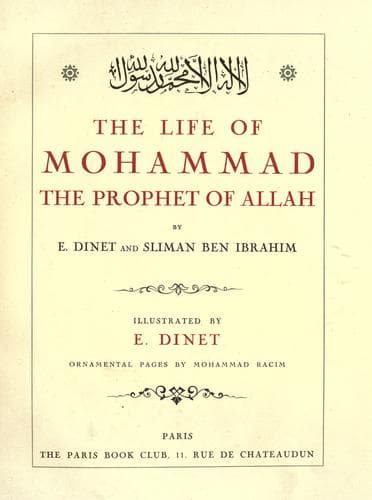
The Life of Mohammad, the Prophet of AllahDinet, Etienne
Religion
The Life of Mohammad, the Prophet of Allah
Dinet, Etienne
Muhammad, Prophet, -632
But the Faithful had heaved no sigh of deliverance. On the contrary,
the sigh was caused by regret at having so soon concluded the fasting
ordeal, in easy payment of the debt of gratitude owing to the
Benefactor. During this pious trial, each soul was fortified and each
body strengthened. In order to pass through the frightful deserts that
encircled them, before going forth to conquer the world, the Believers
were training themselves to get accustomed, as if it were a mere
pastime, to endure the tortures of hunger and thirst that they were
bound to undergo, later on, in the depths of these very wildernesses.
When, after such self-imposed deprivation, they were able to
appreciate the real value of the benefit of food, the Prophet imposed
upon them the "Sadaqat-ul-Fitr," the Alms of the Breaking of the Fast,
forcing the Faithful rich to give a share of their victuals to the
Faithful poor.
[Sidenote: PROPERTY BESTOWED IN ALMS, AND THE PROHIBITION OF FERMENTED
LIQUOURS]
Mohammad judged that the obligation of feeding the poor once a year,
the day after the fast, was insufficient. He completed his ruling by
instituting the "Zakat-ul-Mal," the bestowal of property in alms,
intended to safeguard the existence of pauper Mussulmans without
overburdening rich folks.
This kind of almsgiving, being one of the five foundations of pratical
religion, is due upon all property and revenue whatsoever: gold,
silver, flocks, fruits, grain; and varies from a third to a tenth of
such resources. It should be bestowed with the greatest tact and
humility:
Public-domain text, read in full here on John Shaqi.
Reviews
Reviews
No reviews yet
Be the first to share your thoughts on this work.
Elsewhere in the archive
Join the Discussion
Join the discussion
Sign in to leave a comment or review.
Sign InorCreate an account