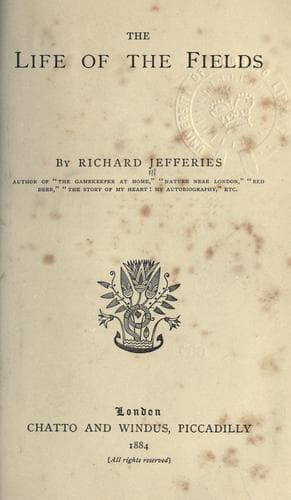
Natural history -- Outdoor books; Nature; Nature study; Paris (France) -- Description and travel
Near where the stream first entered the pond the deposit was much
deeper, for this five feet of alluvium had, in fact, been brought down
by one small brook in the course of little more than fifty years. The
pond had been formed fifty years previously, but already in so short a
period, geologically speaking, all that end was silting up, and the
little brook was making a delta, and a new land was rising from the
depths of the wave. This is exactly what has happened on an immensely
larger scale in the history of the earth, and any one who had seen it,
and knew the circumstances, could comprehend the enormous effects
produced in geological time by rivers like the Ganges, the Amazon, or
Nile. Going by with a gun so frequently, one could not help noticing
these things, and remembering them when reading Lyell's "Geology," or
Maury's book on the sea, or the innumerable treatises bearing on the
same interesting questions. Whether en route for the rabbit-ground, or
looking for water-fowl, or later for snipe, I never passed by without
finding something, often a fragment of fossil washed from the gravel or
sand by the last storm.
NATURE AND THE GAMEKEEPER
The changes in the fauna of the inland counties brought about by the
favour shown to certain species are very remarkable. The alterations
caused by the preservation of pheasants have reached their limit. No
further effects are likely to be produced, even if pheasant-preserving
should be carried to a still greater extent, which itself is
improbable. One creature at least, the pine-marten, has been
exterminated over Southern England, and is now only to be seen--in the
stuffed state--in museums. It may be roughly described as a large
tree-weasel, and was shot down on account of its habit of seizing
pheasants at roost. The polecat is also practically extinct, though
occasional specimens are said to occur. These two animals could not be
allowed to exist in any preserve. But it is in the list of birds that
the change is most striking. Eagles are gone: if one is seen it is a
stray from Scotland or Wales; and so are the buzzards, except from the
moors. Falcons are equally rare: the little merlin comes down from the
north now and then, but the peregrine falcon as a resident or regular
visitor is extinct. The hen-harrier is still shot at intervals; but the
large hawks have ceased out of the daily life, as it were, of woods and
fields. Horned owls are becoming rare; even the barn-owl has all but
disappeared from some districts, and the wood-owl is local. The raven
is extinct--quite put out. The birds are said to exist near the
sea-coast; but it is certain that any one may walk over inland country
for years without seeing one. These, being all more or less birds of
prey, could not but be excluded from pheasant-covers. All these birds,
however, would probably resume their ancient habitations in the course
of five-and-twenty years if permitted to do so. They exist plentifully
Public-domain text, read in full here on John Shaqi.
Reviews
Reviews
No reviews yet
Be the first to share your thoughts on this work.
Elsewhere in the archive
Join the Discussion
Join the discussion
Sign in to leave a comment or review.
Sign InorCreate an account