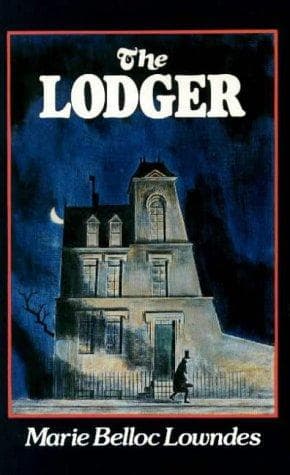
Detective and mystery stories; Jack, the Ripper -- Fiction; Serial murders -- Fiction; Whitechapel (London, England) -- Fiction
But this interruption, this—this accusation, had utterly upset the
witness. She began contradicting herself hopelessly. The man she had
seen hurrying by in the semi-darkness below was tall—no, he was short.
He was thin—no, he was a stoutish young man. And as to whether he was
carrying anything, there was quite an acrimonious discussion.
Most positively, most confidently, the witness declared that she had
seen a newspaper parcel under his arm; it had bulged out at the back—so
she declared. But it was proved, very gently and firmly, that she had
said nothing of the kind to the gentleman from Scotland Yard who had
taken down her first account—in fact, to him she had declared
confidently that the man had carried nothing—nothing at all; that she
had seen his arms swinging up and down.
One fact—if fact it could be called—the coroner did elicit. Lizzie Cole
suddenly volunteered the statement that as he had passed her window he
had looked up at her. This was quite a new statement.
“He looked up at you?” repeated the coroner. “You said nothing of that
in your examination.”
“I said nothink because I was scared—nigh scared to death!”
“If you could really see his countenance, for we know the night was
dark and foggy, will you please tell me what he was like?”
But the coroner was speaking casually, his hand straying over his desk;
not a creature in that court now believed the woman’s story.
“Dark!” she answered dramatically. “Dark, almost black! If you can take
my meaning, with a sort of nigger look.”
And then there was a titter. Even the jury smiled. And sharply the
coroner bade Lizzie Cole stand down.
Far more credence was given to the evidence of the next witness.
This was an older, quieter-looking woman, decently dressed in black.
Being the wife of a night watchman whose work lay in a big warehouse
situated about a hundred yards from the alley or passage where the
crimes had taken place, she had gone out to take her husband some food
he always had at one in the morning. And a man had passed her,
breathing hard and walking very quickly. Her attention had been drawn
to him because she very seldom met anyone at that hour, and because he
had such an odd, peculiar look and manner.
Mrs. Bunting, listening attentively, realised that it was very much
from what this witness had said that the official description of The
Avenger had been composed—that description which had brought such
comfort to her, Ellen Bunting’s, soul.
This witness spoke quietly, confidently, and her account of the
newspaper parcel the man was carrying was perfectly clear and positive.
“It was a neat parcel,” she said, “done up with string.”
She had thought it an odd thing for a respectably dressed young man to
carry such a parcel—that was what had made her notice it. But when
pressed, she had to admit that it had been a very foggy night—so foggy
that she herself had been afraid of losing her way, though every step
was familiar.
Public-domain text, read in full here on John Shaqi.
Reviews
Reviews
No reviews yet
Be the first to share your thoughts on this work.
Elsewhere in the archive
Join the Discussion
Join the discussion
Sign in to leave a comment or review.
Sign InorCreate an account