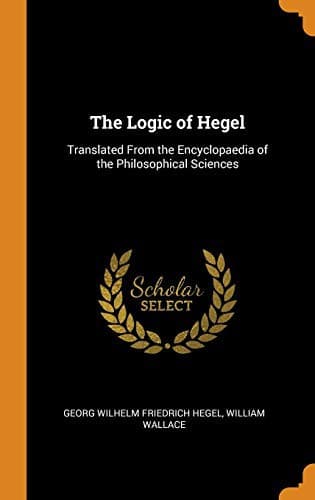
Any mention of Essence implies that we distinguish it from Being:
the latter is immediate, and, compared with the Essence, we look upon
it as mere seeming. But this seeming is not an utter nonentity and
nothing at all, but Being superseded and put by. The point of view
given by the Essence is in general the standpoint of 'Reflection.'
This word 'reflection' is originally applied, when a ray of light in
a straight line impinging upon the surface of a mirror is thrown back
from it. In this phenomenon we have two things,--first an immediate
fact which is, and secondly the deputed, derivated, or transmitted
phase of the same.--Something of this sort takes place when we reflect,
or think upon an object; for here we want to know the object, not in
its immediacy, but as derivative or mediated. The problem or aim of
philosophy is often represented as the ascertainment of the essence of
things: a phrase which only means that things instead of being left
in their immediacy, must be shown to be mediated by, or based upon,
something else. The immediate Being of things is thus conceived under
the image of a rind or curtain behind which the Essence lies hidden.
Everything, it is said, has an Essence; that is, things really are not
what they immediately show themselves. There is therefore something
more to be done than merely rove from one quality to another, and
merely to advance from qualitative to quantitative, and _vice versâ:_
there is a permanent in things, and that permanent is in the first
instance their Essence. With respect to other meanings and uses of the
category of Essence, we may note that in the German auxiliary verb
_'sein'_ the past tense is expressed by the term for Essence (_Wesen_):
we designate past being as _gewesen._ This anomaly of language implies
to some extent a correct perception of the relation between Being and
Essence. Essence we may certainly regard as past Being, remembering
however meanwhile that the past is not utterly denied, but only laid
aside and thus at the same time preserved. Thus, to say, Caesar _was_
in Gaul, only denies the immediacy of the event, but not his sojourn
in Gaul altogether. That sojourn is just what forms the import of
the proposition, in which however it is represented as over and
gone.--'_Wesen_' in ordinary life frequently means only a collection
or aggregate: Zeitungswesen (the Press), Postwesen (the Post-Office),
Steuerwesen (the Revenue). All that these terms mean is that the things
in question are not to be taken single, in their immediacy, but as a
complex, and then, perhaps, in addition, in their various bearings.
This usage of the term is not very different in its implication from
our own.
Public-domain text, read in full here on John Shaqi.
Reviews
Reviews
No reviews yet
Be the first to share your thoughts on this work.
Elsewhere in the archive
Join the Discussion
Join the discussion
Sign in to leave a comment or review.
Sign InorCreate an account