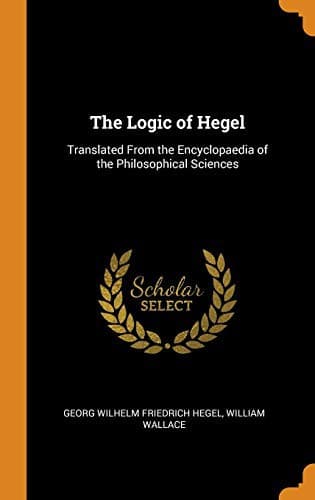
In the second antinomy we have a discussion
of the dilemma: Matter must be conceived either as endlessly divisible,
or as consisting of atoms. The third antinomy bears upon the antithesis
of freedom and necessity, to such extent as it is embraced in the
question, Whether everything in the world must be supposed subject to
the condition of causality, or if we can also assume free beings, in
other words, absolute initial points of action, in the world. Finally,
the fourth antinomy is the dilemma: Either the world as a whole has a
cause or it is uncaused.
The method which Kant follows in discussing these antinomies is as
follows. He puts the two propositions implied in the dilemma over
against each other as thesis and antithesis, and seeks to prove both:
that is to say he tries to exhibit them as inevitably issuing from
reflection on the question. He particularly protests against the charge
of being a special pleader and of grounding his reasoning on illusions.
Speaking honestly, however, the arguments which Kant offers for his
thesis and antithesis are mere shams of demonstration. The thing to
be proved is invariably implied in the assumption he starts from, and
the speciousness of his proofs is only due to his prolix and apagogic
mode of procedure. Yet it was, and still is, a great achievement for
the Critical philosophy, when it exhibited these antinomies: for
in this way it gave some expression (at first certainly subjective
and unexplained) to the actual unity of those categories which are
kept persistently separate by the understanding. The first of the
cosmological antinomies, for example, implies a recognition of the
doctrine that space and time present a discrete as well as a continuous
aspect: whereas the old metaphysic, laying exclusive emphasis on the
continuity, had been led to treat the world as unlimited in space
and time. It is quite correct to say that we can go beyond every
_definite_ space and beyond every _definite_ time: but it is no less
correct that space and time are real and actual only when they are
defined or specialised into 'here' and 'now,'--a specialisation which
is involved in the very notion of them. The same observations apply to
the rest of the antinomies. Take, for example, the antinomy of freedom
and necessity. The main gist of itis that freedom and necessity as
understood by abstract thinkers are not independently real, as these
thinkers suppose, but merely ideal factors (moments) of the true
freedom and the true necessity, and that to abstract and isolate either
conception is to make it false.
Public-domain text, read in full here on John Shaqi.
Reviews
Reviews
No reviews yet
Be the first to share your thoughts on this work.
Elsewhere in the archive
Join the Discussion
Join the discussion
Sign in to leave a comment or review.
Sign InorCreate an account