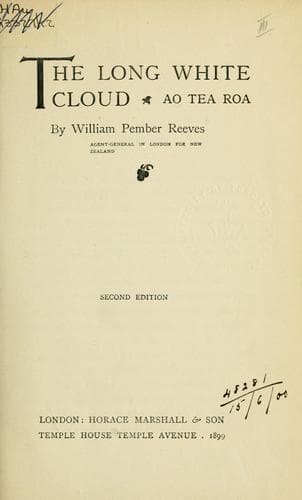
The Long White Cloud: "Ao Tea Roa"Reeves, William Pember
History
The Long White Cloud: "Ao Tea Roa"
Reeves, William Pember
Ethnology -- New Zealand; New Zealand
The Prohibitionists are now disposed, it is believed, to make the
fullest use in future of their right to vote for the reduction of the
number of licensed houses. They still, however, object to the presence
of the Reduction clause in the Act, and unite with the publicans in
the wish to restrict the alternatives at the Local Option polls to
two--total Prohibition and the maintenance of all existing licensed
houses. They have also decided to oppose having the Licensing Poll on
General Election day. Strongest of all is their objection to the three
to two majority required to carry total and immediate Prohibition.
These form the line of cleavage between them and a great many who
share their detestation of the abuses of the liquor traffic.
[Illustration]
Chapter XXII
EIGHT YEARS OF EXPERIMENT
"For I remember stopping by the way
To watch a potter thumping his wet clay."
In 1890 a new force came into the political field--organized labour.
The growth of the cities and of factories in them, the decline of the
alluvial and more easily worked gold-fields, and the occupation of the
more fertile and accessible lands, all gradually tended to reproduce
in the new country old-world industrial conditions. Even the sweating
system could be found at work in holes and corners. There need be no
surprise, therefore, that the labour problem, when engaging so much
of the attention of the civilized world, demanded notice even in New
Zealand. There was nothing novel there in the notion of extending the
functions of the State in the hope of benefiting the community of
the less fortunate classes of it. Already in 1890, the State was the
largest landowner and receiver of rents, and the largest employer of
labour. It owned nearly all the railways and all the telegraphs just
as it now owns and manages the cheap, popular, and useful system of
telephones. It entirely controlled and supported the hospitals and
lunatic asylums, which it managed humanely and well. It also, by means
of local boards and institutions, controlled the whole charitable aid
of the country--a system of outdoor relief in some respects open
to criticism. It was the largest trustee, managed the largest life
insurance business, did nearly all the conveyancing, and educated more
than nine-tenths of the children.
Public-domain text, read in full here on John Shaqi.
Reviews
Reviews
No reviews yet
Be the first to share your thoughts on this work.
Elsewhere in the archive
Join the Discussion
Join the discussion
Sign in to leave a comment or review.
Sign InorCreate an account