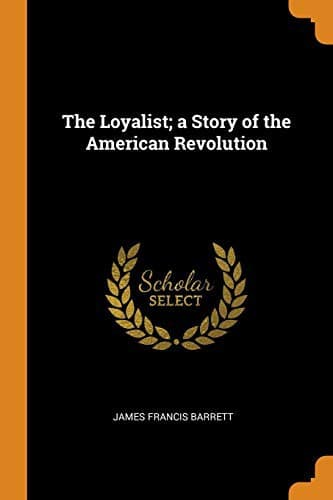
The Loyalist: A Story of the American RevolutionBarrett, James Francis
History
The Loyalist: A Story of the American Revolution
Barrett, James Francis
United States -- History -- Revolution, 1775-1783 -- Fiction
She had clear forgotten to invite the sergeant into the room, so
absorbed was she in the nature of the business at hand. Expectancy
breeds cowardice. When great issues are at stake every act wears an
awful meaning. For this reason she stood transfixed at the threshold,
before this unexpected arrival, whom she associated with the image of
Stephen. With the sudden and delightful lessening of her anxiety,
however, she bethought herself.
"Won't you come in? It was stupid of me not to have asked you before."
The sergeant acted promptly. Marjorie followed at a little distance, but
had no sooner entered the room herself than her father came through the
other door.
"What news? Arnold?"
"Found guilty," was the response.
"The court-martial has come to an end?" asked the girl.
"Yes, Miss. And he has been found guilty," he repeated.
"I thought so," muttered Mr. Allison.
They were seated now in the parlor, the two men at opposite ends of the
table, the girl at the side of the room.
"They met at Morristown?" asked Mr. Allison.
"Yes. At Norris' Tavern. Major-General Howe was chairman of the court.
Only four charges were pressed for trial: the matter of the pass; the
affair of the wagons; the shops; and the imposition upon the militia."
"And Arnold?"
"He managed his own trial, and conducted his own cross-examination. He
made an imposing spectacle as he limped before the court. The sword
knots of Washington were about his waist and he took pains to allude to
them several times during the defense. It was astonishing to hear his
remarkable flow of language and his display of knowledge of military
law. He created a wonderful impression."
"He was found guilty, you say?" interposed Mr. Allison.
"Technically guilty of one charge and imprudent in another," was the
deliberate reply.
"And sentenced?"
"To receive a reprimand from the Commander-in-chief."
Mr. Allison assented by a move of his head.
"How did he take it?" he then asked. "I cannot imagine his proud nature
to yield readily to rebuke."
The visitor thought for a moment.
"His face was ashen pale; there was a haggard look upon it; the eyes
were marked with deep circles and his step faltered as he turned on his
heel and, without a word, made his way from the court room."
"Were you present at the trial?" Marjorie inquired.
"Yes, Miss Allison."
"Was Stephen?"
"No." The sergeant answered mildly, smiling as he did so.
Marjorie smiled, too.
"Tell me," Mr. Allison asked. "Was the evidence conclusive?"
"The _Isis_ occupied the court to some length. It was contended that
General Arnold had issued the pass with evil intent. The affair of the
regiment was referred to in connection with this, but no great stress
was brought to bear upon it because of the fear of arousing a possible
prejudice in the minds of the court. That fact was introduced solely as
a motive."
Allison shook his head again.
Public-domain text, read in full here on John Shaqi.
Reviews
Reviews
No reviews yet
Be the first to share your thoughts on this work.
Elsewhere in the archive
Join the Discussion
Join the discussion
Sign in to leave a comment or review.
Sign InorCreate an account