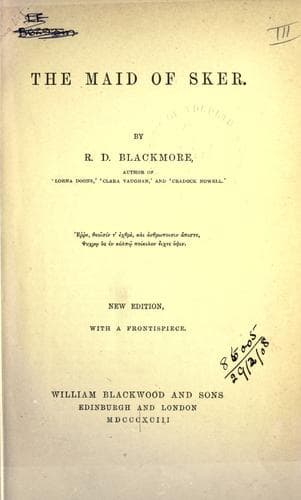
The Maid of SkerBlackmore, R. D. (Richard Doddridge)
General
The Maid of Sker
Blackmore, R. D. (Richard Doddridge)
Foundlings -- Fiction; Romance fiction; Wales -- Fiction
And now, though I still took observation of Narnton Court (as in honour
bound to deserve my salary), and though the Parson still rode down, and
went the round of the deck at times when nobody could expect him; yet it
was not in my nature to be kept from asking something as to all these
people. You may frighten a man, and scare his wits, and keep him under,
and trample on him, and even beat his feelers down, and shut him up like
a jellyfish; but, after all this, if he is a man, he will want to know
the reason. For this makes half of the difference between man and the
lower animals:--the latter, when punished, accept it as a thing that
must befall them; and so do the negroes, and all proper women: but a man
always wants to know why it must be; though it greatly increases his
trouble to ask, and still more to tell it again, if you please.
Sir Philip Bampfylde, as every one said, was a very nice gentleman
indeed, the head of an ancient family, and the owner of a large estate.
Kind, moreover, and affable, though perhaps a little stately, from
having long held high command and important rank in the army. Some years
ago he had attained even to the rank of general, which is the same thing
among land-forces as an admiral is with us; and he was so proud of this
position that he always wished to be so addressed, rather than by the
title which had been so long in the family. For his argument was that he
had to thank good fortune for being a baronet, whereas good conduct and
perseverance alone could have made him a general. Now if these had made
him an admiral, I would always entitle him so; as it is, I shall call
him "Sir Philip," or "General," just as may happen to come to my mind.
Now this gentleman had two sons, and no other children; the elder was
Philip Bampfylde, Esquire, and the younger Captain Drake Bampfylde, of
whom I have spoken already. Philip, the heir, had been appointed to
manage the family property, which spread for miles and miles away; and
this gave him quite enough to do, because his father for years and years
was away on foreign service. And during this time Squire Philip married
a lady of great beauty, sent home by his father from foreign parts after
rescue from captivity. She was of very good extraction, so far as
foreigners can be, and a princess (they said) in her own right, though
without much chance of getting it. And she spoke the prettiest broken
English, being very sensitive.
Public-domain text, read in full here on John Shaqi.
Reviews
Reviews
No reviews yet
Be the first to share your thoughts on this work.
Elsewhere in the archive
Join the Discussion
Join the discussion
Sign in to leave a comment or review.
Sign InorCreate an account