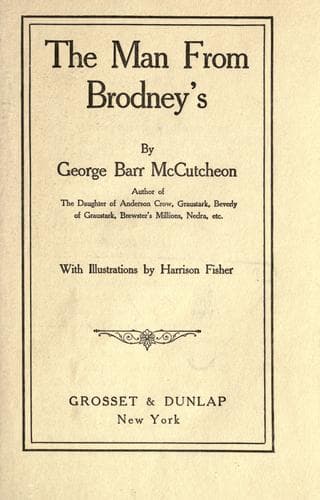
Inheritance and succession -- Fiction; Islands -- Fiction; Love stories; Nobility -- Fiction
They had seen but little of each other since landing in England, except
as they were thrown together at the conferences. There was no pretence
of intimacy on either side; the shadow of the past was still there to
remind them that a skeleton lurked behind and grinned spitefully in its
obscurity. Lady Agnes went in for every diversion imaginable; for a
wonder, she dragged Deppingham with her on all occasions. It was a most
unexpected transformation; their friends were puzzled. The rumour went
about town that she was in love with her husband.
As for Bobby Browne, he was devotion itself to Drusilla. They sailed for
New York within three days after the settlement was effected, ignoring
the enticements of a London season--which could not have mattered much
to them, however, as Drusilla emphatically refused to wear the sort of
gowns that Englishwomen wear when they sit in the stalls. Besides, she
preferred the Boston dressmakers. The Brownes were rich. He could now
become a fashionable specialist. They were worth nearly a million and a
quarter in American dollars. Moreover, they, as well as the Deppinghams,
were the possessors of rubies and sapphires that had been thrust upon
them by supplicating adversaries in the hour of departure--gems that
might have bought a dozen wives in the capitals of Persia; perhaps a
score in the mountains where the Kurds are cheaper. The Brownes
naturally were eager to get back to Boston. They now had nothing in
common with Taswell Skaggs; Skaggs is not a pretty name.
Mr. Britt afterward spent three weeks of incessant travel on the
continent and an additional seven days at sea. In Baden-Baden he
happened upon Lord and Lady Deppingham. It will be recalled that in
Japat they had always professed an unholy aversion for Mr. Britt. Is it
cause for wonder then that they declined his invitation to dine in
Baden-Baden? He even proposed to invite their entire party, which
included a few dukes and duchesses who were leisurely on their way to
attend the long-talked-of nuptials in Thorberg at the end of June.
The Syndicate, after buying off the hereditary forces, assumed a half
interest in the Japat Company's business; the islanders controlled the
remaining half. The mines were to be operated under the management of
the Jews and eight hours were to constitute a day's work. The personal
estate passed into the hands of the islanders, from whom Skaggs had
appropriated it in conjunction with John Wyckholme. All in all, it
seemed a fair settlement of the difficulty. The Jews paid something like
£2,000,000 sterling to the islanders in consideration of a twenty years'
grant. Their experts had examined the property before the death of Mr.
Skaggs; they were not investing blindly in the great undertaking.
Public-domain text, read in full here on John Shaqi.
Reviews
Reviews
No reviews yet
Be the first to share your thoughts on this work.
Elsewhere in the archive
Join the Discussion
Join the discussion
Sign in to leave a comment or review.
Sign InorCreate an account