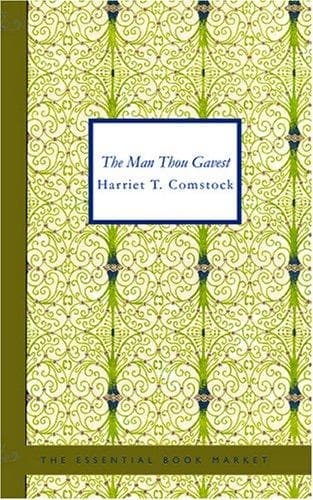
The Man Thou GavestComstock, Harriet T. (Harriet Theresa)
General
The Man Thou Gavest
Comstock, Harriet T. (Harriet Theresa)
Fiction
But Ann did not die. Slowly, almost hesitatingly, she turned back to
them and brought a new power with her. She, apparently, left her baby
looks and nature in the shadowy place from which she had escaped. Once
health came to her, she was the merriest of merry children--almost noisy
at times--in the rollicking fashion of Betty's irrepressible Bobilink.
And the haunting likeness to Truedale was gone. For a year or two the
lean, thready little girl looked like no one but her own elfish self;
and then--it was like a revealment--she grew to be like Nella-Rose!
Lynda, at times, was breathless as she looked and remembered. She had
seen the mother only once; but that hour had burned the image of face,
form, and action into her soul. She recalled, too, Conning's graphic
description of his first meeting with Nella-Rose. The quaint, dramatic
power that had marked Ann's mother, now developed in the little
daughter. She had almost entirely lost the lingering manner of
speech--the Southern expressions and words--but she was as different
from the children with whom she mingled as she had ever been.
When she was strong enough she resumed her studies with the governess
and also began music. This she enjoyed with the passion that marked her
attitude toward any person or thing she loved.
"Oh, it lets something in me, free!" she confided to Truedale. "I shall
never be naughty or unkind again--I wouldn't dare!"
"Why?" Conning was no devotee of music and was puzzled by Ann's
intensity.
"Why," she replied, puckering her brows in the effort to make herself
clear, "I--I wouldn't be worthy of--of the beautiful music, if I were
horrid."
Truedale laughed and patted her pretty cropped head, over which the new
little curls were clustering.
Life in the old house was full and rich at that time. Conning was, as he
often said, respectably busy and important enough in the affairs of men
to be content; he would never be one who enjoyed personal power.
Lynda, during Ann's first years, had taken a partner who attended to
interviews, conferences, and contracts; but in the room over the
extension the creative work went on with unabated interest. Little Ann
soon learned to love the place and had her tiny chair beside the hearth
or table. There she learned the lessons of consideration for others, and
self-control.
"If the day comes," Lynda told Betty, "when my work interferes with my
duty to Con and Ann, it will go! But more and more I am inclined to
think that the interference is a matter of choice. I prefer my
profession to--well, other things."
"Of course," Betty agreed; "women should not be forever coddling their
offspring, and when they learn to call things by their right names and
develop some initiative, they won't whine so much."
Public-domain text, read in full here on John Shaqi.
Reviews
Reviews
No reviews yet
Be the first to share your thoughts on this work.
Elsewhere in the archive
Join the Discussion
Join the discussion
Sign in to leave a comment or review.
Sign InorCreate an account