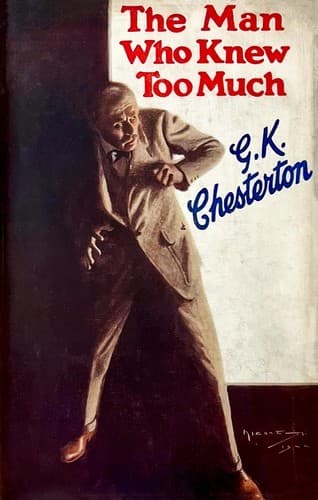
The Man Who Knew Too MuchChesterton, G. K. (Gilbert Keith)
ReligionComparative
The Man Who Knew Too Much
Chesterton, G. K. (Gilbert Keith)
Aristocracy (Social class) -- Fiction; Detective and mystery stories, English; Great Britain -- Fiction
"The organs are organized in fact," said the flippant Mr. Fisher.
"Well, I've known it pretty cold before now in Italy and even in
India, up on the Himalayan slopes. The ice on our own little round
pond will be quite cozy by comparison."
Juliet Bray was an attractive lady with dark hair and eyebrows and
dancing eyes, and there was a geniality and even generosity in her
rather imperious ways. In most matters she could command her
brother, though that nobleman, like many other men of vague ideas,
was not without a touch of the bully when he was at bay. She could
certainly command her guests, even to the extent of decking out the
most respectable and reluctant of them with her mediaeval
masquerade. And it really seemed as if she could command the
elements also, like a witch. For the weather steadily hardened and
sharpened; that night the ice of the lake, glimmering in the
moonlight, was like a marble floor, and they had begun to dance and
skate on it before it was dark.
Prior's Park, or, more properly, the surrounding district of
Holinwall, was a country seat that had become a suburb; having once
had only a dependent village at its doors, it now found outside all
its doors the signals of the expansion of London. Mr. Haddow, who
was engaged in historical researches both in the library and the
locality, could find little assistance in the latter. He had already
realized, from the documents, that Prior's Park had originally been
something like Prior's Farm, named after some local figure, but the
new social conditions were all against his tracing the story by its
traditions. Had any of the real rustics remained, he would probably
have found some lingering legend of Mr. Prior, however remote he
might be. But the new nomadic population of clerks and artisans,
constantly shifting their homes from one suburb to another, or their
children from one school to another, could have no corporate
continuity. They had all that forgetfulness of history that goes
everywhere with the extension of education.
Nevertheless, when he came out of the library next morning and saw
the wintry trees standing round the frozen pond like a black forest,
he felt he might well have been far in the depths of the country.
The old wall running round the park kept that inclosure itself still
entirely rural and romantic, and one could easily imagine that the
depths of that dark forest faded away indefinitely into distant
vales and hills. The gray and black and silver of the wintry wood
were all the more severe or somber as a contrast to the colored
carnival groups that already stood on and around the frozen pool.
For the house party had already flung themselves impatiently into
fancy dress, and the lawyer, with his neat black suit and red hair,
was the only modern figure among them.
Public-domain text, read in full here on John Shaqi.
Reviews
Reviews
No reviews yet
Be the first to share your thoughts on this work.
Elsewhere in the archive
Join the Discussion
Join the discussion
Sign in to leave a comment or review.
Sign InorCreate an account