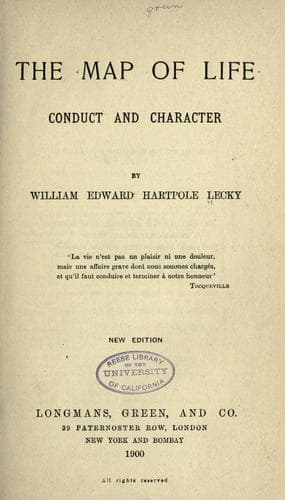
The Map of Life: Conduct and CharacterLecky, William Edward Hartpole
Philosophy
The Map of Life: Conduct and Character
Lecky, William Edward Hartpole
Character; Conduct of life
'_Above all things_, my brethren, swear not.' If, as is generally
assumed, this refers to the custom of using profane oaths in common
conversation, how remote from modern ideas is the place assigned to
this vice, which perhaps affects human happiness as little as any other
that can be mentioned, in the scale of criminality, and how curiously
characteristic is the fact that the vice to which this supremacy of
enormity is attributed continued to be prevalent during the ages when
theological influences were most powerful, and has in all good society
faded away in simple obedience to a turn of fashion which proscribes it
as ungentlemanly! For a long period Acts condemning it were read at
stated periods in the churches,[20] and one of these described it as
likely, by provoking God's wrath, to 'increase the many calamities these
nations now labour under.' How curiously characteristic is the
restriction in common usage of the term 'immoral' to a single vice, so
that a man who is untruthful, selfish, cruel, or intemperate might still
be said to have led 'a moral life' because he was blameless in the
relations of the sexes! In the estimates of the character of public men
the same disproportionate judgment may be constantly found in the
comparative stress placed upon private faults and the most gigantic
public crimes. Errors of judgment are not errors of morals, but any
public man who, through selfish, ambitious, or party motives, plunges or
helps to plunge his country into an unrighteous or unnecessary war,
subordinates public interest to his personal ambition, employs himself
in stimulating class, national, or provincial hatreds, lowers the moral
standard of public life, or supports a legislation which he knows to
tend to or facilitate dishonesty, is committing a crime before which, if
it be measured by its consequences, the gravest acts of mere private
immorality dwindle into insignificance. Yet how differently in the case
of brilliant and successful politicians are such things treated in the
judgment of contemporaries, and sometimes even in the judgments of
history!
Public-domain text, read in full here on John Shaqi.
Reviews
Reviews
No reviews yet
Be the first to share your thoughts on this work.
Elsewhere in the archive
Join the Discussion
Join the discussion
Sign in to leave a comment or review.
Sign InorCreate an account