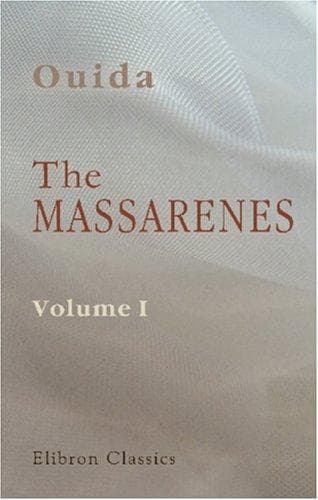
Aristocracy (Social class) -- England -- Fiction; England -- Social conditions -- 19th century -- Fiction; Rich people -- Fiction
He was what is called an essentially worthy man, and he was an
essentially modern product of modern energies.
He had no perceivable sins, he conformed to all religious observances,
he had always kept on the right side of the law, he never made a
jest, and he never lost a shilling. As a husband he was faithful, as a
father exemplary, as a Christian devout, and as a citizen blameless. If
thousands of people had cursed him, if tens of thousands of workmen had
sweated for him, if hundreds of thousands of cattle had perished for
him, if gambling hells and drinking-shops and opium dens had enriched
him, if rotten ships and starved crews, and poisonous trades and
famished families had helped to make the splendors of Harrenden House
and the glories of Vale Royal, these facts did not matter to either
society or Christianity, and were mere personal details into which
nobody could enter. William Massarene was one of those persons who are
the pillars of the great middle class and the sources of that healthy
plebeian blood from which a decaying patriciate is recruited.
“I stand by all as upholds property,” he said one day to Lord Greatrex,
the great Conservative leader.
“The Northern Farmer has said it before you,” murmured that gentleman.
“The creed is sound and simple, if not popular.”
Massarene dared not swear in such a presence, but he thought, “Damn
popularity!”
He did not want to be popular. He despised the people: which was very
natural, for he had come from them. He liked to drive behind his sleek
high-bred carriage-horses and see the crowd part in the Strand or on
the Embankment, and women and children scurry and stumble to make way
for his progress; it made him realize the vast distance which now
separated himself from the common multitude.
He would have liked, if it had been possible, to knock down
half-a-dozen of the rabble as a sign of his superiority. But he was
in a country full of policemen and prejudices, and so he had to show
his superiority in another manner. One morning, when he was driving
to a meeting in the City with a member of parliament, who was a noted
philanthropist, in his brougham, his high-stepping bays did knock
down an old woman, lame and very poorly clad. William Massarene held
all women in slight esteem, but old women were in his estimate wholly
useless and obnoxious; he would have put them all at forty years old
in lethal chambers. When cattle were past bearing they went to the
shambles, eh?
But, having a philanthropist beside him, and two policemen at his
carriage-door, he busied himself about this maimed old female, had her
put in a cab, told his footman to go on the box with her, and ordered
his card to be given to the authorities of the nearest hospital.
“Say I will provide for her for life,” he said to his servant rather
loudly.
The people in the street cheered him.
“That’s a real gemman!” said a baker’s boy.
William Massarene threw the discerning lad a shilling.
Public-domain text, read in full here on John Shaqi.
Reviews
Reviews
No reviews yet
Be the first to share your thoughts on this work.
Elsewhere in the archive
Join the Discussion
Join the discussion
Sign in to leave a comment or review.
Sign InorCreate an account