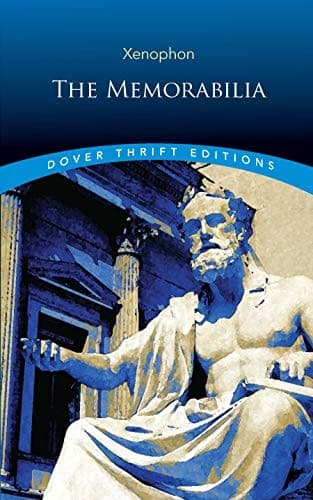
Classical literature; Philosophers, Ancient -- Biography -- Early works to 1800; Socrates -- Trials, litigation, etc. -- Early works to 1800
Soc. And can worse befall a man, think you? Can he be subjected to a
more baleful influence than that which induces him to choose what is
hurtful in place of what is helpful; which cajoles him to devote himself
to the evil and to neglect the good; which forces him, will he nill he,
to do what every man in his sober senses would shrink from and avoid?
I can imagine nothing worse (he replied).
Soc. Self-control, it is reasonable to suppose, will be the cause of
opposite effects upon mankind to those of its own opposite, the want of
self-control?
Euth. It is to be supposed so.
Soc. And this, which is the source of opposite effects to the very
worst, will be the very best of things?
Euth. That is the natural inference.
Soc. It looks, does it not, Euthydemus, as if self-control were the best
thing a man could have?
It does indeed, Socrates (he answered).
Soc. But now, Euthydemus, has it ever occurred to you to note one fact?
What fact? (he asked).
Soc. That, after all, incontinency is powerless to bring us to that
realm of sweetness which some look upon (10) as her peculiar province;
it is not incontinency but self-control alone which has the passport to
highest pleasures.
(10) Or, "which we are apt to think of as."
In what way? (he asked). How so?
Why, this way (Socrates answered): since incontinency will not suffer us
to resist hunger and thirst, or to hold out against sexual appetite, or
want of sleep (which abstinences are the only channels to true pleasure
in eating and drinking, to the joys of love, to sweet repose and
blissful slumber won by those who will patiently abide and endure till
each particular happiness is at the flood) (11)--it comes to this: by
incontinency we are cut off from the full fruition of the more obvious
and constantly recurring pleasures. (12) To self-control, which alone
enables us to endure the pains aforesaid, alone belongs the power to
give us any pleasure worth remembering in these common cases.
(11) Or, "at its season." Lit. "is as sweet as possible."
(12) Or, "from tasting to any extent worth speaking of the most
necessary and all-pervading sources of happiness."
You speak the words of truth (13) (he answered).
(13) Lit. "What you say is absolutely and entirely true" (the "vraie
verite" of the matter).
Public-domain text, read in full here on John Shaqi.
Reviews
Reviews
No reviews yet
Be the first to share your thoughts on this work.
Elsewhere in the archive
Join the Discussion
Join the discussion
Sign in to leave a comment or review.
Sign InorCreate an account