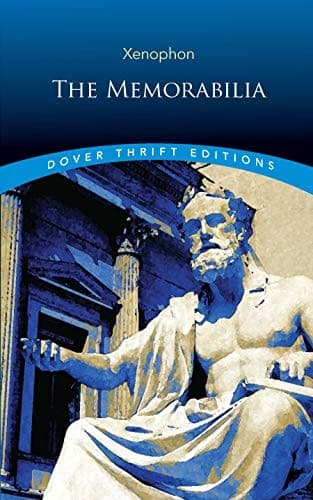
Classical literature; Philosophers, Ancient -- Biography -- Early works to 1800; Socrates -- Trials, litigation, etc. -- Early works to 1800
Again, a certain practical knowledge of astronomy, a certain skill in
the study of the stars, he strongly insisted on. Every one should know
enough of the science to be able to discover the hour of the night or
the season of the month or year, for the purposes of travel by land or
sea--the march, the voyage, and the regulations of the watch; (11) and
in general, with regard to all matters connected with the night season,
or with the month, or the year, (12) it was well to have such reliable
data to go upon as would serve to distinguish the various times and
seasons. But these, again, were pieces of knowledge easily learnt from
night sportsmen, (13) pilots of vessels, and many others who make it
their business to know such things. As to pushing the study of astronomy
so far as to include a knowledge of the movements of bodies outside
our own orbit, whether planets or stars of eccentric movement, (14) or
wearing oneself out endeavouring to discover their distances from
the earth, their periods, and their causes, (15) all this he strongly
discountenanced; for he saw (he said) no advantage in these any more
than in the former studies. And yet he was not unversed (16) in the
subtleties of astronomy any more than in those of geometry; only these,
again, he insisted, were sufficient to wear out a man's lifetime, and to
keep him away from many more useful pursuits.
(11) Schneid. cf. Plat. "Rep." vii. 527 D.
(12) "Occurrences connected with the night, the month, or year." e.g.
the festival of the Karneia, the {tekmerion} (point de repere) of
which is the full moon of August. Cf. Eur. "Alc." 449.
(13) See Plat. "Soph." 220 D; above, III. xi. 8; "Cyrop." I. vi. 40;
"Hunting," xii. 6; Hippocr. "Aer." 28.
(14) See Lewis, "Astron. of the Ancients"; cf. Diog. Laert. vii. 1.
144.
(15) Or, "the causes of these."
(16) {oude touton ge anekoos en}. He had "heard," it is said,
Archelaus, a pupil of Anaxagoras. Cf. Cic. "Tusc." V. iv. 10.
Public-domain text, read in full here on John Shaqi.
Reviews
Reviews
No reviews yet
Be the first to share your thoughts on this work.
Elsewhere in the archive
Join the Discussion
Join the discussion
Sign in to leave a comment or review.
Sign InorCreate an account