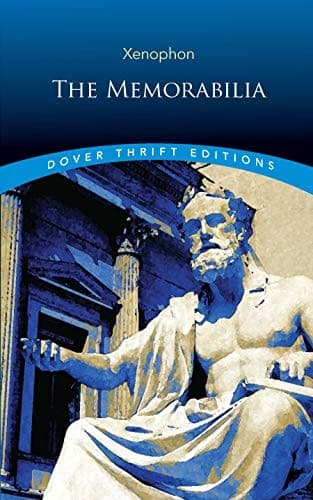
Classical literature; Philosophers, Ancient -- Biography -- Early works to 1800; Socrates -- Trials, litigation, etc. -- Early works to 1800
To which Socrates: Why do not you tell them the fable of the dog? (10)
Once on a time, so goes the story, when beasts could speak, the sheep
said to her master, "What a marvel is this, master, that to us, your
own sheep, who provide you with fleeces and lambs and cheese, you give
nothing, save only what we may nibble off earth's bosom; but with this
dog of yours, who provides you with nothing of the sort, you share
the very meat out of your mouth." When the dog heard these words, he
answered promptly, "Ay, in good sooth, for is it not I who keep you safe
and sound, you sheep, so that you are not stolen by man nor harried by
wolves; since, if I did not keep watch over you, you would not be able
so much as to graze afield, fearing to be destroyed." And so, says
the tale, the sheep had to admit that the dog was rightly preferred to
themselves in honour. And so do you tell your flock yonder that like the
dog in the fable you are their guardian and overseer, and it is thanks
to you that they are protected from evil and evildoers, so that they
work their work and live their lives in blissful security.
(10) See Joseph Jacobs, "The Fables of Aesop," vol. i. p. 26 foll.,
for "a complete list of the Fables given in Greek literature up to
the fall of Greek independence." Cf. Hesiod, "Works and Days," 202
foll.; Archilochus, 89 (60), Bergk; Herod. i. 141; Aesch.
"Myrmid." fr. 123; Aristot. "Rhet." II. xx.
VIII
At another time chancing upon an old friend whom he had not seen for a
long while, he greeted him thus.
Soc. What quarter of the world do you hail from, Eutherus?
The other answered: From abroad, just before the close of the war; but
at present from the city itself. (1) You see, since we have been denuded
of our possessions across the frontier, (2) and my father left me
nothing in Attica, I must needs bide at home, and provide myself with
the necessaries of life by means of bodily toil, which seems preferable
to begging from another, especially as I have no security on which to
raise a loan.
(1) Lit. "from here." The conversation perhaps takes place in Piraeus
404 B.C.
(2) Or, "colonial possession." Cf. "Symp." iv. 31.
Soc. And how long do you expect your body to be equal to providing the
necessaries of life for hire?
Euth. Goodness knows, Socrates--not for long.
Soc. And when you find yourself an old man, expenses will not diminish,
and yet no one will care to pay you for the labour of your hands.
Euth. That is true.
Soc. Would it not be better then to apply yourself at once to such
work as will stand you in good stead when you are old--that is, address
yourself to some large proprietor who needs an assistant in managing his
estate? (3) By superintending his works, helping to get in his crops,
and guarding his property in general, you will be a benefit to the
estate and be benefited in return.
(3) Cf. "Cyrop." VIII. iii. 48.
I could not endure the yoke of slavery, Socrates! (he exclaimed).
Public-domain text, read in full here on John Shaqi.
Reviews
Reviews
No reviews yet
Be the first to share your thoughts on this work.
Elsewhere in the archive
Join the Discussion
Join the discussion
Sign in to leave a comment or review.
Sign InorCreate an account