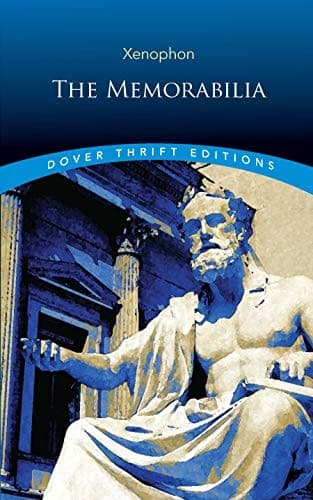
Classical literature; Philosophers, Ancient -- Biography -- Early works to 1800; Socrates -- Trials, litigation, etc. -- Early works to 1800
(24) Reading {ateria}. See L. Dindorf ad loc., Ox. ed. lxii. Al.
{apeiria}, a want of skill, or {ataxia}, disorderliness. Cf. "Pol.
Ath." i. 5.
(25) Possibly the author is thinking of the events of 406, 405 B.C.
(see "Hell." I. vii. and II.), and history may repeat itself.
Do not (replied Socrates), do not, I pray you, permit yourself to
believe that Athenians are smitten with so incurable a depravity. Do you
not observe their discipline in all naval matters? Look at their prompt
and orderly obedience to the superintendents at the gymnastic contests,
(26) their quite unrivalled subservience to their teachers in the
training of our choruses.
(26) Epistatoi, i.e. stewards and training-masters.
Yes (he answered), there's the wonder of it; to think that all those
good people should so obey their leaders, but that our hoplites and our
cavalry, who may be supposed to rank before the rest of the citizens
in excellence of manhood, (27) should be so entirely unamenable to
discipline.
(27) {kalokagathia}.
Then Socrates: Well, but the council which sits on Areopagos is composed
of citizens of approved (28) character, is it not?
(28) Technically, they must have passed the {dokimasia}. And for the
"Aeropagos" see Grote, "H. G." v. 498; Aristot. "Pol." ii. 12;
"Ath. Pol." 4. 4, where see Dr. Sandys' note, p. 18.
Certainly (he answered).
Soc. Then can you name any similar body, judicial or executive, trying
cases or transacting other business with greater honour, stricter
legality, higher dignity, or more impartial justice?
No, I have no fault to find on that score (he answered).
Soc. Then we ought not to despair as though all sense of orderliness and
good discipline had died out of our countrymen.
Still (he answered), if it is not to harp upon one string, I maintain
that in military service, where, if anywhere, sobreity and temperance,
orderliness and good discipline are needed, none of these essentials
receives any attention.
May it not perhaps be (asked Socrates) that in this department they are
officered by those who have the least knowledge? (29) Do you not notice,
to take the case of harp-players, choric performers, dancers, and the
like, that no one would ever dream of leading if he lacked the requisite
knowledge? and the same holds of wrestlers or pancratiasts.
(29) {episteme}. See below, III. ix. 10.
Public-domain text, read in full here on John Shaqi.
Reviews
Reviews
No reviews yet
Be the first to share your thoughts on this work.
Elsewhere in the archive
Join the Discussion
Join the discussion
Sign in to leave a comment or review.
Sign InorCreate an account