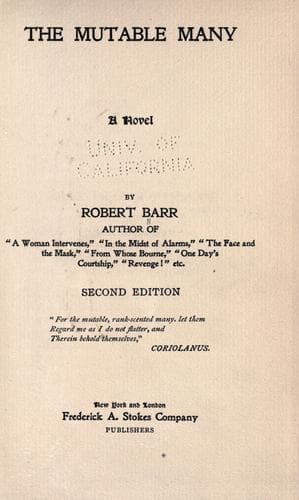
Factories -- Fiction; London (England) -- Fiction; Love stories; Strikes and lockouts -- Fiction
“Exactly. That is what I wanted to know. As to winning, we shall see. I
quite agree with you that there is nothing so satisfactory in the
long run as a square, stand-up fight, and let the best man win. The
combatants have a mutual respect for each other afterwards. The trouble
is that the contest is rarely free from the side issues that affect the
final result. In this case you are not sure of your backers; neither am
I. If I were the owner of this establishment I would bring on the war
instantly, carry it through with the relentlessness of a Barbary pirate,
win it, of course, and have the most contented men in England in my
employ ever after. As it is, the trouble is not going to be decided by
either your generalship or mine, but by the relative constancy of our
backers. If the men round on you before my directors get a trifle
more frightened than they are now, then you will be defeated. If the
directors get panic-stricken first, then I shall go under. It will be a
hollow victory either way, and will not be decided on the merits of the
case at all. It is a toss-up, and, if we were sensible men, we two would
settle it now by twirling a penny in the air; besides, if you do win,
it will be a barren triumph, for you will lose everything you gain the
moment there is a pinch in trade. The only reason you have a show of
winning is because business is brisk, and the directors naturally wish
to make hay while the sun shines. They don’t wish to be crippled and
have a fuss on while their trade rivals are reaping the benefit of their
embarrassment. The moment trade becomes dull again, down will go the
wages, and no power on earth can prevent the fall. It is all a question
of supply and demand. On the other hand, I give you fair warning that,
if I win, not another Union man will ever set foot in these works again.
So if you really have the interests of the men at heart, Marsten, you
will reflect a bit before you bring on the fight.”
“Do you doubt that I have the interests of the men at heart?”
“No, I don’t. I believe you are thoroughly unselfish, but I also believe
you are needlessly sacrificing yourself. You see it is difficult for
us to come to an agreement, for we look out on the world from entirely
different standpoints. You are at the foot of the hill, and the mists
of the valley of youth are around you, distorting your vision, and
destroying correct proportion. I am up towards the top of the mountain,
where the air is clearer. You see men heroic and noble; I see them small
and mean. You believe in the workingman; I do not. The chances are that
neither of us sees with absolute accuracy, and the truth lies between
the two extremes. Nevertheless, I think the day of chivalrous, unselfish
action is past, and it is every man for himself in these times.”
Public-domain text, read in full here on John Shaqi.
Reviews
Reviews
No reviews yet
Be the first to share your thoughts on this work.
Elsewhere in the archive
Join the Discussion
Join the discussion
Sign in to leave a comment or review.
Sign InorCreate an account