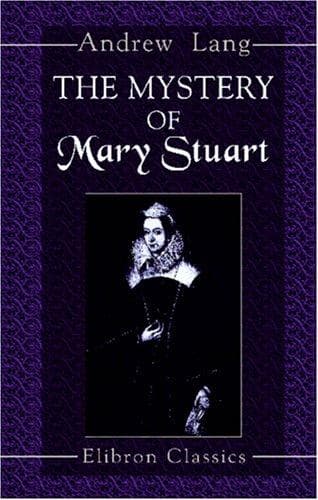
Mary, Queen of Scots, 1542-1587; Queens -- Scotland -- Biography; Scotland -- History -- Mary Stuart, 1542-1567
Before going further we must examine Moray’s probable sources of
information as to Mary’s correspondence. From April 7, to the beginning of
July, he had been out of Scotland: first in England; later on the
Continent. As early as May 8, Kirkcaldy desired Bedford to forward a
letter to Moray, bidding him come to Normandy, in readiness to return,
(and aid the Lords,) now banding against Bothwell.[231] ‘He will haste
him after he has seen it.’ Moray did not ‘haste him,’ his hour had not
come. He was, however, in touch with his party. On July 8, a fortnight
after the discovery of the Casket, Robert Melville, at ‘Kernye’ in Fife,
sends ‘Jhone a Forret’ to Cecil. John is to go on to Moray, and
(Lethington adds, on July 9) a packet of letters for Moray is to be
forwarded ‘with the greatest diligence that may be.’ Melville says, as to
‘Jhone a Forret’ (whom Cecil, in his endorsement, calls ‘Jhon of
Forrest’), ‘Credit the bearer, who knows all occurrents.’ Can ‘Jhone a
Forret’ be a cant punning name for John Wood, sometimes called ‘John a
Wood,’ by the English, a man whom Cecil knew as Moray’s secretary? John
Wood was a Fifeshire man, a son of Sir Andrew Wood of Largo, and from Fife
Melville was writing. Jhone a Forret is, at all events, a bearer whom, as
he ‘knows all occurents,’ Cecil is to credit.[232] This Wood is the very
centre of the secret dealings of Mary’s enemies, of the Lords, and Lennox.
Cecil, Elizabeth, and Leicester are asked to ‘credit’ him, later, as Cecil
‘credited’ ‘Jhone a Forret.’
Up to this date (July 8) when letters were sent by the Lords to Moray, he
was, or feigned to be, friendly to his sister. On that day a messenger of
his, from France, was with Elizabeth, who told Cecil that Moray was vexed
by Mary’s captivity in Loch Leven, and that he would be ‘her true servant
in all fortunes.’ He was sending letters to Mary, which the Lords were
not to see.[233] His messenger was Nicholas Elphinstone, who was not
allowed to give Mary his letters.[234] After receiving the letters sent to
him from Scotland on July 8, Moray turned his back on his promises of
service to Mary. But, before he received these letters, Archbishop Beaton
had told Alava that Moray was his sister’s mortal enemy and by him
mistrusted.[235] Moray’s professions to Elizabeth may have been a blind,
but his letters for Mary’s private eye have a more genuine air.
Moray arrived in England on July 23.
Public-domain text, read in full here on John Shaqi.
Reviews
Reviews
No reviews yet
Be the first to share your thoughts on this work.
Elsewhere in the archive
Join the Discussion
Join the discussion
Sign in to leave a comment or review.
Sign InorCreate an account