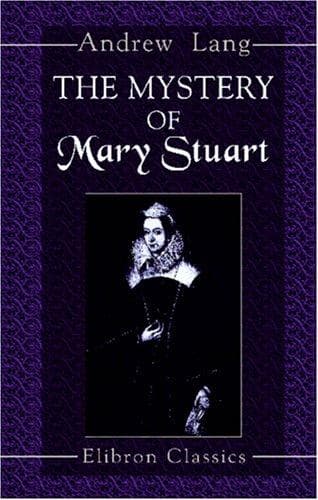
Mary, Queen of Scots, 1542-1587; Queens -- Scotland -- Biography; Scotland -- History -- Mary Stuart, 1542-1567
The haggling was not ended. On December 16, 1568, Elizabeth offered three
choices to Lesley: Mary might send a trusty person with orders to make a
direct answer; or answer herself to nobles sent by Elizabeth; or appoint
her Commissioners, or any others, to answer before Elizabeth’s
Commissioners.[324] Lesley fell back on Elizabeth’s promises: and an
anecdote about Trajan. On December 23 or 24, Mary’s Commissioners received
a letter by her written at Bolton on December 19.[325] Mr. Hosack says
that ‘she commanded them forthwith to charge the Earl of Moray and his
accomplices’ with Darnley’s murder.[326] But that was just what Mary did
not do as far as her letter goes, though on December 24, Herries declared
that she did.[327] Friends and foes of Mary alike pervert the facts. Mary
first said that she had received the ‘Eik’ in which her accusers lied,
attributing to her the crimes of which they are guilty. She glanced
scornfully at the charge that _she_ meant to murder her child, whom _they_
had striven to destroy in her womb, at Riccio’s murder: ‘intending to have
slane him and us both.’ She then, before she answers, asks to see the
copies and originals of the Casket Letters, ‘the principal writings, if
they have any produced,’ which she as yet knew not. And then, if she may
see Elizabeth, she will prove her own innocence and her adversaries’
guilt.
Thus she does not by any means bid her friends _forthwith_ to accuse her
foes. That would have been absurd, till she had seen the documents brought
against her as proofs. But, to shorten a long story, neither at the
repeated request of her Commissioners, nor of La Mothe, who demanded this
act of common justice, would Elizabeth permit Mary to see either the
originals, or even copies, of the Casket Letters. She promised, and broke
her promise.[328]
This incident left Mary with the advantage. How can an accused person
answer, if not allowed to see the documents in the case? We may argue that
Elizabeth refused, because politics drifted into new directions, and
inspired new designs. But Mary’s defenders can always maintain that she
never was allowed to see the evidence on which she was accused. From
Mary’s letter of December 19, or rather from Lesley’s précis of it
(‘Extract of the principall heidis’) it is plain that she does not bid her
Commissioners accuse anybody, _at the moment_. But, on December 22,
Lindsay challenged Herries to battle for having said that Moray, and ‘his
company here present,’ were guilty of Darnley’s death. Herries admitted
having said that _some_ of them were guilty. Lindsay lies in his throat if
he avers that Herries spoke of him specially: and, on that quarrel,
Herries will fight. And he will fight any of the principals of them if
they sign Lindsay’s challenge, ‘and I shall point them forth and fight
with some of the traitors therein.’ He communicated the challenge and
reply to Leicester.[329] Herries probably hoped to fight Morton and
Lethington.
Public-domain text, read in full here on John Shaqi.
Reviews
Reviews
No reviews yet
Be the first to share your thoughts on this work.
Elsewhere in the archive
Join the Discussion
Join the discussion
Sign in to leave a comment or review.
Sign InorCreate an account