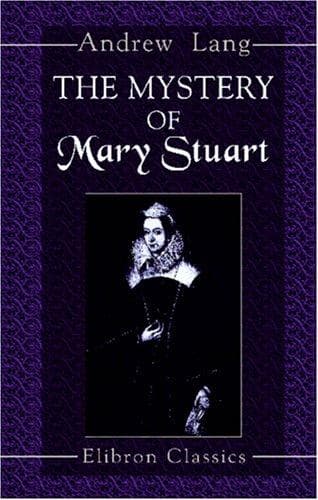
Mary, Queen of Scots, 1542-1587; Queens -- Scotland -- Biography; Scotland -- History -- Mary Stuart, 1542-1567
‘I watched later up there’ (at Kirk o’ Field?) ‘than I would have done,
had it not been to draw out [‘of him,’ in Scots] what this bearer will
tell you: that I find the best matter to excuse your affair that could be
offered. I have promised him’ (Darnley?) ‘to bring him’ (Lord Robert?) ‘to
him’ (Darnley?) ‘to-morrow: if you find it good, put order to it. Now,
Sir, I have broken my promise, for you have commanded me not to send or
write. Yet I do it not to offend you, and if you knew my dread of giving
offence you would not have so many suspicions against me, which, none the
less, I cherish, as coming from the thing in the world which I most desire
and seek, namely your good grace. Of that my conduct shall assure me, nor
shall I ever despair thereof, so long as, according to your promise, you
lay bare your heart to me. Otherwise I shall think that my misfortune, and
the fair attitude[360] of those’ (Lady Bothwell) ‘who have not the third
part of the loyalty and willing obedience that I bear to you, have gained
over me the advantage won by the second love of Jason [Creusa or Glauce?]
Not that I compare you _à un si malheureuse_’ (_sic_) ‘nor myself to one
so pitiless [as Medea] however much you make me a little like her in what
concerns you; or [but?] to preserve and guard you for her to whom alone
you belong, if one can appropriate what one gains by honourably, and
loyally, and absolutely loving, as I do and will do all my life, come what
pain and misery there may. In memory whereof and of all the ills that you
have caused me, be mindful of the place near here’ (Darnley’s chamber?).
‘I do not ask you to keep promise with me to-morrow’ (the Scots has,
wrongly, ‘I crave with that ye keepe promise with me the morne,’ which
Laing justifies by a false conjectural restoration of the French), ‘but
that we meet’ (_que nous truvions = que nous nous trouvions ensemble_?),
‘and that you do not listen to any suspicion you may have without letting
me know. And I ask no more of God than that you may know what is in my
heart which is yours, and that He preserve you at least during my life,
which shall be dear to me only while my life and I are dear to you. I am
going to bed, and wish you good night. Let me know early to-morrow how you
fare, for I shall be anxious. And keep good watch if the bird leave his
cage, or without his mate. Like the turtle I shall abide alone, to lament
the absence, however short it may be. What I cannot do, my letter [would
do?] heartily, if it were not that I fear you are asleep. For I did not
dare to write before Joseph’ (Joseph Riccio) ‘and bastienne (_sic_) and
Joachim, who only went away when I began.’
Public-domain text, read in full here on John Shaqi.
Reviews
Reviews
No reviews yet
Be the first to share your thoughts on this work.
Elsewhere in the archive
Join the Discussion
Join the discussion
Sign in to leave a comment or review.
Sign InorCreate an account