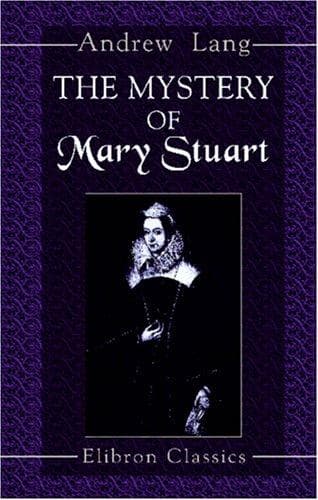
Mary, Queen of Scots, 1542-1587; Queens -- Scotland -- Biography; Scotland -- History -- Mary Stuart, 1542-1567
specially of your name and memory, which are therein enclosed, like my
hair in the ring. Never shall they issue forth till death lets you make a
trophy of my bones, even as the ring is full of them’ (_i.e._ in enamel),
‘in proof that you have made entire conquest of me, and of my heart, to
such a point that I leave you my bones in memory of your victory, and of
my happy and willing defeat, to be better employed than I deserve. The
enamel round the ring is black, to symbolise the constancy of her who
sends it. The tears are numberless as are my fears of your displeasure, my
tears for your absence, and for my regret not to be yours, to outward
view, as I am, without weakness of heart or soul.
‘And reasonably so, were my merits greater than those of the most perfect
of women, and such as I desire to be. And I shall take pains to imitate
such merits, to be worthily employed under your dominion. Receive this
then, my only good, in as kind part as with extreme joy I have received
your marriage’ (apparently, from what follows, a contract of marriage or a
ring of betrothal), ‘which never shall leave my bosom till our bodies are
publicly wedded, as a token of all that I hope or desire of happiness in
this world. Now fearing, my heart, to weary you as much in the reading as
I take pleasure in the writing, I shall end, after kissing your hands,
with as great love as I pray God (O thou, the only prop of my life!) to
make your life long and happy, and to give me your good grace, the only
good thing which I desire, and to which I tend. I have shown what I have
learned to this bearer, to whom I remit myself, knowing the credit that
you give him, as does she who wishes to be ever your humble and obedient
loyal wife, and only lover, who for ever vows wholly to you her heart and
body changelessly, as to him whom I make possessor of my heart which, you
may be assured, will never change till death, for never shall weal or woe
estrange it.’
The absurd affectation of style in this Letter, so different from the
plain manner of Letters I. and II., may be a poetical effort by Mary, or
may be a forger’s idea of how a queen in love ought to write. In the
latter case, to vary the manner so much from that of the earlier Letters,
was a bold experiment and a needless.
Public-domain text, read in full here on John Shaqi.
Reviews
Reviews
No reviews yet
Be the first to share your thoughts on this work.
Elsewhere in the archive
Join the Discussion
Join the discussion
Sign in to leave a comment or review.
Sign InorCreate an account