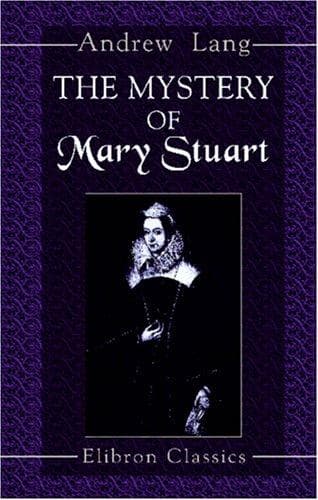
Mary, Queen of Scots, 1542-1587; Queens -- Scotland -- Biography; Scotland -- History -- Mary Stuart, 1542-1567
[358] Melville, _Memoirs_, 173, 174. Hosack’s _Mary_, i. 536 (_The Book of
Articles_). Anderson, ii. 18, 19 (_Detection_). _Cecil’s Journal_, under
date Saturday, February 8, has ‘She confronted the King and my lord of
Halyrodhouse conforme to hir letter wryttin the nycht before:’ that is,
this Letter III.
[359] Mr. Hosack makes an error in averring that no letter as to this
intrigue was produced at Westminster or later; that the letter was only
shown at York in October, 1568. There and then Moray’s party ‘_inferred_,
upon a letter of her own hand, that there was another meane of a more
cleanly conveyance devised to kill the King’ (Goodall, ii. 142; Hosack, i.
409, 410). The letter was that which we are now considering.
[360] The Scots has ‘handling.’ The Cambridge MS. of the Scots translation
reads ‘composing of thame,’ from ‘le bien composer de ceux’ in the
original French.
[361] Dr. Bresslau notes several such coincidences, but stress cannot be
laid on phrases either usual, or such as a forger might know to be
favourites of Mary’s.
[362] Laing, ii. 286.
[363] _Mary Queen of Scots_, vol. ii. No. 63.
[364] ‘Je m’en deferay au hazard de _la_ faire entreprandre:’ the
translators, not observing the gender referring to the maid, have
blundered.
[365] It appears that they did not officially put in this compromising
Ainslie paper. Cecil’s copy had only such a list of signers ‘as John Read
might remember.’ His copy says that Mary approved the band on May 14,
whereas the Lords allege that she approved before they would sign. Bain,
ii. 321, 322. A warrant of approval was shown at York. Bain, ii. 526. Cf.
_supra_, p. 254, note 3.
[366] Labanoff, ii. 32-44.
[367] _Maitland of Lethington_, ii. 224.
[368] Lethington to Beaton, October 24, 1566; cf. Keith, ii. 542.
[369] ‘The safety,’ ‘la seurete.’ Mr. Henderson’s text has ‘la seincte.’
The texts in his volume are strangely misleading and incorrect, both in
the English of Letter II. and in the copies of the original French.
[370] This means a ring in black enamel, with representations of tears and
bones, doubtless in white: a fantastic mourning ring. Mary left a diamond
in black enamel to Bothwell, in June, 1566.
[371] This coincidence was pointed out to me by Mr. Saintsbury.
Public-domain text, read in full here on John Shaqi.
Reviews
Reviews
No reviews yet
Be the first to share your thoughts on this work.
Elsewhere in the archive
Join the Discussion
Join the discussion
Sign in to leave a comment or review.
Sign InorCreate an account