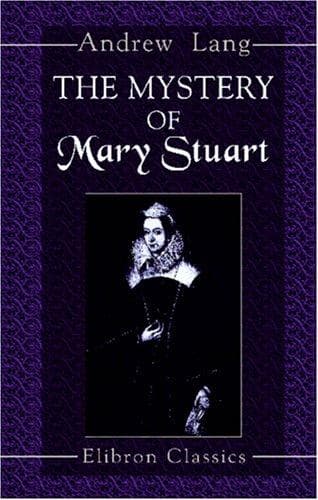
Mary, Queen of Scots, 1542-1587; Queens -- Scotland -- Biography; Scotland -- History -- Mary Stuart, 1542-1567
They, however, insisted that Mary, in November, ‘removed and secluded’
Darnley from her Council. To prevent his knowing what letters were
written, when he signed them with her, she had his name printed on an iron
stamp, ‘and used the same _in all things_,’ in place of his subscription.
This stamp was employed in affixing his signature to the ‘remission’ to
the Hamiltons.[35]
In fact, Darnley’s ambitions were royal, but he had an objection to the
business which kings are well paid for transacting. Knox’s continuator
makes him pass ‘his time in hunting and hawking, and such other pleasures
as were agreeable to his appetite, having in his company gentlemen willing
to satisfy his will and affections.’ He had the two Anthony Standens, wild
young English Catholics. While Darnley hunted and hawked, Lennox ‘lies at
Glasgow’ (where he had a castle near the Cathedral), and ‘takes, I hear,
what he likes from all men,’ says Randolph.[36] He writes (November 6)
that Mary ‘above all things desires her husband to be called King.’[37]
Yet it is hinted that she is in love with Riccio! On the same date ‘oaths
and bands are taken of all that ... acknowledge Darnley king, and liberty
to live as they list in religion.’ On November 19, Mary was suffering from
‘her old disease that commonly takes her this time of year in her side.’
It was a chronic malady: we read of it in the Casket Letters. From
November 14 to December 1, she was ill, but Darnley hunted and hawked in
Fife, from Falkland probably, and was not expected to return till December
4.[38] Lennox was being accused of ‘extortions’ at Glasgow, complained of
‘to the Council.’ Châtelherault was ‘like to speed well enough in his suit
to be restored,’ after his share in Moray’s rebellion.
Darnley was better engaged, perhaps, in Fife, than in advocating his needy
and extortionate father before the Council, or in opposing the limited
pardon to old Châtelherault. In such circumstances, Darnley was often
absent, either for pleasure, or because his father was not allowed to
despoil the West; while the Hamilton chief, the heir presumptive of the
throne, was treated as a repentant rebel, rather than as a feudal enemy.
He was an exile, and lost his ‘moveables’ and all his castles, so he told
Elizabeth.[39] During, or after, these absences of Darnley, that ‘iron
stamp,’ of which Buchanan complains, was made and used.
Public-domain text, read in full here on John Shaqi.
Reviews
Reviews
No reviews yet
Be the first to share your thoughts on this work.
Join the Discussion
Join the discussion
Sign in to leave a comment or review.
Sign InorCreate an account