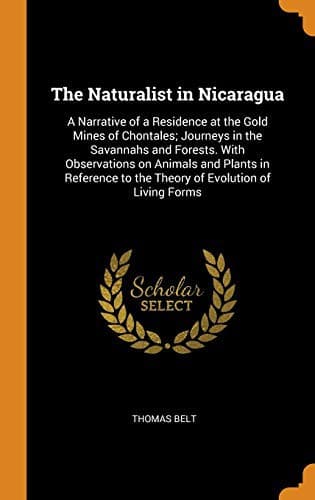
Natural history -- Nicaragua; Nicaragua -- Description and travel
There are other insect parasites, for the increase and protection
of which a hairy coating is even more favourable than it is for the
ticks. The Pediculi are specially adapted to live amongst hair,
their limbs being constructed for clinging to it. They deposit
their nits or eggs amongst it, fastening them securely to the bases
of the hairs. Although the pediculi are almost unknown to the
middle and upper classes of civilised communities, in consequence
of the cleanliness of their persons, clothing, and houses, they
abound amongst savage and half-civilised people. A slight immunity
from the attacks of acari and pediculi might in a tropical country
more than compensate an animal for the loss of its hairy coat,
especially in the case of the domesticated dog, which finds shelter
with its master, has not to seek for its food at night, and is
protected from the attacks of stronger animals. In the huts of
savages dogs are greatly exposed to the attacks of parasitical
insects, for vermin generally abound in such localities. Man is the
only species amongst the higher primates that lives for months and
years--often indeed from generation to generation--on the same
spot. Monkeys change their sleeping places almost daily. The
ourang-outang, that makes a nest of the boughs of trees, is said to
construct a fresh one every night. The dwelling places of savages,
often made of, or lined with, the skins of animals, with the dusty
earth for a floor, harbour all kinds of insect vermin, and produce
and perpetuate skin disease, due to the attacks of minute sarcopti.
If the dog by losing its hair should obtain any protection from
these and other insect pests, instead of wondering that a hairless
breed of dogs has been produced in a tropical country, I am more
surprised that haired ones should abound. That they do so must, I
think, be owing to man having preferred the haired breeds for their
superior beauty and greater variety, and encouraged their
multiplication.
CHAPTER 12.
Olama.
The "Sanate."
Muy-muy.
Idleness of the people.
Mountain road.
The "Bull Rock."
The bull's-horn thorn.
Ants kept as standing armies by some plants.
Use of honey-secreting glands.
Plant-lice, scale-insects, and leaf-hoppers furnish ants
with honey, and in return are protected by the latter.
Contest between wasps and ants.
Waxy secretions of the homopterous hemiptera.
Public-domain text, read in full here on John Shaqi.
Reviews
Reviews
No reviews yet
Be the first to share your thoughts on this work.
Elsewhere in the archive
Join the Discussion
Join the discussion
Sign in to leave a comment or review.
Sign InorCreate an account