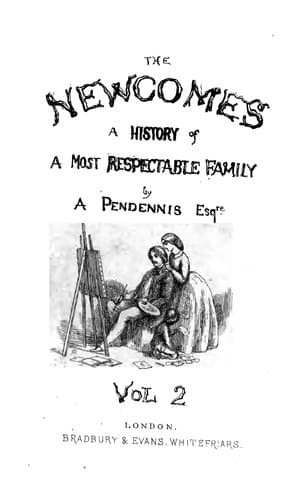
The Newcomes: Memoirs of a Most Respectable FamilyThackeray, William Makepeace
General
The Newcomes: Memoirs of a Most Respectable Family
Thackeray, William Makepeace
Domestic fiction; Families -- England -- Fiction
The Colonel from his balcony saw the slim figure of the retreating
girl, and looked fondly after her: and as the smoke of his cigar
floated in the air, he formed a fine castle in it, whereof Clive was
lord, and that pretty Ethel, lady. “What a frank, generous, bright
young creature is yonder!” thought he. “How cheery and gay she is; how
good to Miss Honeyman, to whom she behaved with just the respect that
was the old lady’s due—how affectionate with her brothers and sisters!
What a sweet voice she has! What a pretty little white hand it is! When
she gave it me, it looked like a little white bird lying in mine. I
must wear gloves, by Jove I must, and my coat is old-fashioned, as
Binnie says; what a fine match might be made between that child and
Clive! She reminds me of a pair of eyes I haven’t seen these forty
years. I would like to have Clive married to her; to see him out of the
scrapes and dangers that young fellows encounter, and safe with such a
sweet girl as that. If God had so willed it, I might have been happy
myself, and could have made a woman happy. But the Fates were against
me. I should like to see Clive happy, and then say _Nunc dimittis_. I
shan’t want anything more to-night, Kean, and you can go to bed.”
“Thank you, Colonel,” says Kean, who enters, having prepared his
master’s bedchamber, and is retiring when the Colonel calls after him:
“I say, Kean, is that blue coat of mine very old?”
“Uncommon white about the seams, Colonel,” says the man.
“Is it older than other people’s coats?”—Kean is obliged gravely to
confess that the Colonel’s coat is very queer.
“Get me another coat, then—see that I don’t do anything or wear
anything unusual. I have been so long out of Europe, that I don’t know
the customs here, and am not above learning.”
Kean retires, vowing that his master is an old trump; which opinion he
had already expressed to Mr. Kuhn, Lady Hanne’s man, over a long
potation which those two gentlemen had taken together. And, as all of
us, in one way or another, are subject to this domestic criticism, from
which not the most exalted can escape, I say, lucky is the man whose
servants speak well of him.
CHAPTER XVI.
In which Mr. Sherrick lets his House in Fitzroy Square
Public-domain text, read in full here on John Shaqi.
Reviews
Reviews
No reviews yet
Be the first to share your thoughts on this work.
Elsewhere in the archive
Join the Discussion
Join the discussion
Sign in to leave a comment or review.
Sign InorCreate an account